Why representation doesn’t translate to influence
Research has found women of colour face distinct barriers in leadership. What cultural and boardroom obstacles are at play?
Canterbury director Tony Fallon MInstD says board culture can either create belonging or reinforce the need for people to hide who they are.
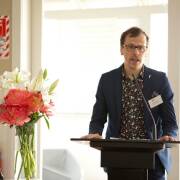
Tony Fallon MInstD
Current sociocultural attitudes are an obstacle to true diversity for the rainbow community, according to Canterbury director Tony Fallon MInstD.
Is it easy to bring your whole self to the table?
While that might be the common rhetoric used by those already on boards, being authentic can be challenging for people who face long-held stereotypes and socially ingrained attitudes that shape a sense of belonging – or create a divide that reinforces a need to mask or hide who you are.
Growing up in Catholic Ireland, Fallon learned to be cautious about revealing his sexuality. “I’m always very guarded about sharing [information about my sexuality] with people,” he says. His first governance role was on a grassroots rainbow board, where he gained an early insight into the challenges of board dynamics.
That initial taste of governance illuminated how infighting can derail a board’s focus, despite everyone’s good intentions. When he left the role, he was not sure if governance was for him.
It was only when he arrived in New Zealand that he wanted to lean into his healthcare background and his desire to connect with and care for others, and contribute to real change. His first substantial board role was as chair of the New Zealand AIDS Foundation (now Burnett Foundation Aotearoa) which provided Fallon with clarity about the direction he wanted to take.
“I saw the social change that can happen through a good public health campaign and good information, and the role a board can play in that,” he says.
Passionate about the organisation’s purpose and its aim to prevent harm and stop the spread of bloodborne viruses, Fallon also acknowledged that while advice may not always be followed, the organisation still had a role in empowering the community to protect themselves.
“That was my first role where I went, ‘Wow, there are all these possibilities, so let’s see where this road ends and where we can go’,” Fallon recalls.
Based in Ōtautahi Christchurch, Fallon now serves as a director of Freemasons New Zealand and as a member of the IoD Canterbury Branch Committee. He has also chaired Drug Injecting Services Canterbury, Athletics Canterbury and the Southern Health and Disability Ethics Committee.
These roles have reinforced Fallon’s ability to contribute effectively at the board table. He no longer second-guesses himself as he once did but says he has to make a concerted effort to remember the people who have backed him and recognised his potential.
“Old Tony would have said, ‘I’m just a guy who works in health’, but the new Tony was like, ‘No, hold on. You’re on the branch committee and you’re at this table; you can hold your own’.”
Fallon says being a good chair means having “a respect for board culture and understanding when change needs to happen – that comes from the strength of a good chair and a respectful board culture”.
Being open to different views and making room for everyone to speak also matters.
“Sometimes the quietest voices in the room have the most profound insights,” says Fallon, who adds that embedding safety within board culture also impacts who the organisation attracts and how people contribute to meetings.
“To be your authentic self, there has to be that safety to express your opinion, so when I’m on a board, I talk a lot about my partner, and if people aren’t open or accepting of that, that’s a sign that something needs to shift in the board culture,” he says.
He believes that a shift is needed to undo some of the embedded social conditioning at play, especially regarding gender dynamics in relationships, such as references to wives, partners or ladies on invitations to events. He says this is especially true living in a city like Christchurch, which still prizes its old-world, Old English patriarchal culture.
Fallon sees this as applying more broadly to New Zealand, too.
“It’s just an acceptance thing,” he says of what it means to be part of the rainbow community, acknowledging the deeper social issues that still need to be addressed before wider changes will be visible.
For more information or to join the Rainbow Directors’ Network, click here.