Why representation doesn’t translate to influence
Research has found women of colour face distinct barriers in leadership. What cultural and boardroom obstacles are at play?

Dr Jessica Lai explains why women still face discrimination that slips under the radar and limits their career progression.
“I grew up with a mother who said, ‘You can do anything you want in life if you work hard enough’.” – Indra Nooyi, former CEO, PepsiCo.
As the first immigrant and woman of colour to lead a Fortune 500 company, Indra Nooyi has often been held up as an example of what is possible when barriers are overcome. But ‘working hard’ isn’t enough for women in industries where sexism, sociocultural and structural biases continue to obstruct progress, including for highly qualified women at the top of their game.
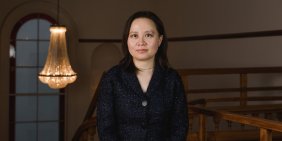
Many women face discrimination that goes under the radar, according to Victoria University of Wellington’s "Professor Jessica Lai, whose research focuses on intellectual property law, patent law, gender and patents, and women in intellectual property."
Lai, who has taught at the University of Geneva, University of Lucerne (Switzerland), Stockholm University (Sweden) and Goethe University Frankfurt (Germany), conducted research into women who practise in patent law in Aotearoa New Zealand and Australia. Her research found that, in a profession traditionally dominated by men, discrimination against women was common but often subtle.
“It can include women not being taken seriously, treated like secretaries, expected to take care of the ‘social’ side of professional spaces (as invisible free work), not being considered qualified when they are, having to prove themselves in ways that their men colleagues do not and having less qualified men being deferred to over them.”
Lai says women were frequently interrupted, spoken over and not heard. She says the layers of discrimination can be both subtle and overt, but manifest differently depending on the workplace culture, the dynamic and makeup of the board or group and the individual characteristics of the women themselves.
And things are not necessarily improving.
“We’re seeing a global rise of the rhetoric that any woman (or any person of a marginalised social group) in a position of power could only have gotten there through some special measure and can’t possibly be competent,” says Lai.
Lai conducted research with colleagues Dr Ronelle Geldenhuys and Maryam Khajeh Tabari, and says while women may be less likely to face overt sexism, old boys’ club attitudes and inappropriate sexual and physical behaviour – which women were confronted with upon first entering the profession in the 1980s and 1990s – women now often face discrimination in the form of unconscious bias. They are not always heard and can be required to work harder to prove themselves, even when they have doctorates in science and engineering.
Lai says women – including senior women – are often talked down to and “presumed not to understand an invention” – an attitude that men in the patent law sector do not typically experience.
She says this is symptomatic of deeper social issues, including clients asking to speak to a man rather than a woman.
At the same time, women cannot be too “pushy” about correcting negative presumptions. Lai says assertiveness and ambition can be perceived as negative traits in senior women, when the same traits might be lauded in men.
“Society often doesn’t like it when women want to be in leadership [and] it’s pure sexism that men are allowed to be competitive, but women are vilified for it,” she says.
Lai believes women are up against high and unfair expectations – to reach excellence without appearing competitive and to go above and beyond the confines of their role. This might include taking on additional burdens, such as the responsibility for creating cultural change within an organisation.
“Senior women are often expected to fix sexist organisational cultures which . . . absolves the men from having to do this,” Lai says of an issue that must be addressed by everyone, not just women.
Other factors that feed discrimination are race, other characteristics and motherhood, which continue to inform perceptions about a woman’s competency and ability to do her job. Her research found that some women in the profession made a conscious effort not to disclose whether they were parents and also hid their pregnancies to avoid negative perceptions and repercussions.
Lai says marginalised groups do not always recognise or support the experiences of other marginalised groups.
“History has shown us that white women haven’t always been the best allies to women of colour, similarly, queer men haven’t always been the best allies for queer women, and there can be discrimination within the queer community against trans people,” says Lai.
Younger women also face barriers that can affect their progression. Lai says they are more vulnerable to a range of discrimination, including not being taken seriously, which is a compounding barrier. They can also be exposed to “highly inappropriate behaviour because they are generally not in positions of power and often might not know what is appropriate or what is not”, she says.
So, what can boards do to support women, whether on their boards or within the organisations they serve?
Lai says boards need to be aware of existing unconscious biases, and that it is everyone’s responsibility to “fix a sexist organisation”.
“We shouldn’t be putting women on glass cliffs, not at higher rates than men. Women are asking for a fair deal where there is some thought about structural and unconscious biases and how to correct them. So, when boards are thinking about their membership, they should consider who is speaking, how people treat one another and how women are assigned tasks.”
Lai is hopeful that, as expectations shift, more ways of thinking, working and leading will be recognised.