Oversight, insight, foresight – and a bit of hindsight
Three experienced chairs on intervention, candour, disagreement and what they expect around the board table.
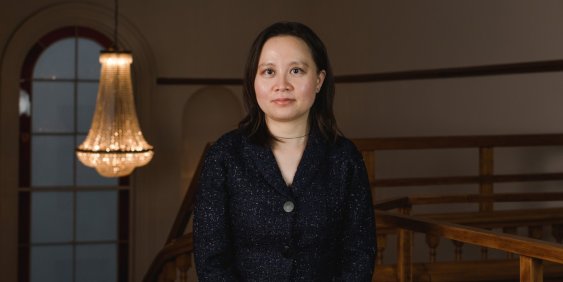
Associate Professor Thu Phuong Truong
Research has found women of colour face distinct barriers in leadership. What cultural and boardroom obstacles are at play?
There can be a stark difference between being seen and being heard. For women of colour, securing a seat at the table can still come with barriers to having their views heard.
What obstacles remain and what can boards do about them?
Associate Professor Thu Phuong Truong, of Victoria University of Wellington, specialises in financial accounting, capital markets, corporate governance and regulation. Her research includes continuous disclosure obligations, bad news hoarding, women on boards, corporate takeovers and market regulation. Truong says diverse voices are needed on boards to mitigate risk and cut through ambiguity.
“Women don’t focus on financial metrics alone [but] look into broader stakeholder perspectives. They tend to have higher emotional intelligence and are more open to new ideas and ask more questions.”
Truong says this is particularly relevant to risk mitigation and reducing the risk of ‘bad news hoarding’, where adverse company information is withheld from the market and can accumulate before eventually being disclosed.
"Research overseas found that companies with more women on the board tend to respond more quickly to bad news,” says Truong.
Truong says greater female representation can support transparency, but boards can still delay or minimise the disclosure of uncomfortable information. Delayed or incomplete disclosure can make shares harder to price accurately and increase uncertaintly for investors.
The Enron collapse in 2001 provides a high-profile example of bad news hoarding. Its vice president, Sherron Watkins, discovered special purpose entities that the company had used to hide billions of dollars of debt. Watkins raised concerns internally, but the extent of Enron’s problems was not disclosed to the market. The company later filed for bankruptcy and its shares collapsed from about US$90 to less than US$1.
A robust whistleblowing policy gives employees a safer route to raise concerns.
Women have made gains in leadership and board representation, but Truong sees regulatory and financial risk when boards lack diversity. Women from different cultural backgrounds can also face another layer of barriers.
Truong says that, as an ethnic Asian immigrant serving on a board, she has encountered “very hostile reactions” that dismissed her opinion.
“Or a polite bypass with a superficial comment made by a male board member who will reframe the issue or restate what I have just said and then add, ‘but’ or ‘however’, and the idea will not be noted down or be up for further consideration,” she says.
In Australia, 73% of ASX 300 boards had at least 30% women directors in 2025, according to the 2025 Board Diversity Index. Yet representation does not remove other barriers. Separate research found 85% of culturally and racially marginalised women reported having to work twice as hard for recognition and being held to higher standards.
Those identifying as ‘Asian’ also experience exclusion from ‘influential networking opportunities’ and report being overlooked.
These ‘unseen’ cultural obstacles faced by women of colour create a disadvantage. Deeply ingrained patriarchal norms, expectations and filial ties contribute to this. Truong says women from Asian countries will often put family first, while household duties can limit their career growth. Reluctance to self-promote and a desire to ensure others do not ‘lose face’ are among the biggest cultural obstacles for women leaders of Asian descent.
Those who have conducted business in China, for example, will be familiar with guanxi – the networks and relationships that support business – and with the importance of ‘saving face’ in communication and relationships. As New Zealand’s demographic becomes more diverse, understanding cultural values can help boards broaden their diversity and work effectively across international markets.
New Zealanders can also favour a subtle approach to conflicting views. Dr Johannes Karl touches on this in an episode of Board Talk Off the Cuff, referring to this Kiwi communication quirk as ‘the tea towel problem’ – a roundabout way of communicating that can get in the way of collective purpose.
Truong says women of colour can find it difficult to make their views heard at the board table. One strategy she has used is sending written questions and notes to the chair ahead of meetings to ensure her points are raised. However, she found that relying on the chair in this way could also reduce her confidence to speak up herself.
Truong says a positive sign is when the chair or other directors acknowledge a contribution, record it for further discussion and follow it up. Confidence helps, too.
"Women can be flexible, but they have to be firm,” says Truong. She also believes women have a better chance of having their ideas considered when the chair is a woman.