
Directors' fees insights
Annual insights into directors' fees.
2026 IoD Leadership Conference
David Downs CMInstD explains how a board backed fundamental science when neither the outcome nor the funding was guaranteed.
In 2017, a doctor told David Downs CMInstD he had less than a year to live. His first move, he joked, was to go to Harvey Norman and buy a whole lot of things on interest-free terms.
Downs survived lymphoma after receiving CAR-T cell therapy, which genetically modifies immune cells to attack cancer. He is now an ambassador and board member at Wellington’s Malaghan Institute of Medical Research, which is developing its own CAR-T programme.
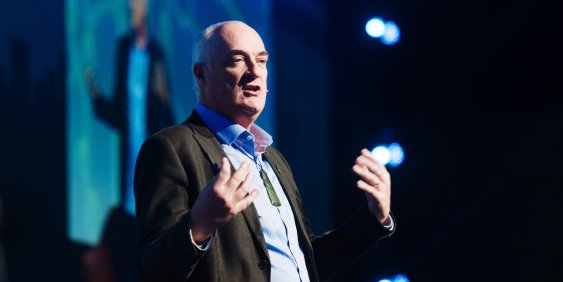
Speaking at the IoD 2026 Leadership Conference, Downs used his experience to examine how boards should fund work whose outcome cannot be guaranteed.
His involvement in health governance grew from his experience as a patient at North Shore Hospital. Seeing the conditions hospital staff worked under led him to the Well Foundation, a charity funding North Shore and West Auckland hospital projects beyond what the public system can provide. He now chairs its board.
Downs, chief executive of Education New Zealand and chair of The Icehouse, serves on several commercial and charitable boards.
He is involved with three health charities, each with a different risk profile. The Well Foundation backs relatively well-defined initiatives with a high likelihood of success – including a $250,000 virtual reality project in women’s health, including pelvic floor and mesh-related issues.
Blood Cancer New Zealand primarily funds patient support and counselling. It also allocates some funding to blood cancer research at the University of Auckland, where the outcome is less certain. The board must decide how much revenue to put into that work when patients’ immediate needs will always exceed the funding available.
The Malaghan Institute sits further along that risk spectrum. About 150 researchers, funded predominantly by philanthropy, work on fundamental science whose outcomes, Downs said, are “very unclear”. That means the institute faces what he called “double uncertainty”: the research may not succeed and the revenue supporting it is inherently unpredictable.
That uncertainty came to the board table when Malaghan’s CAR-T programme reached its next stage. The institute had spent more than a decade on the underlying research, working with a Chinese institution and building on overseas work to develop its own intellectual property.
The science had been proven, but no commercial partner came forward to take it further. A large pharmaceutical company would typically take on that next stage, Downs said, but New Zealand was “too small of a market”.
The next stage of the clinical trial would cost about $15 million. The board had to decide whether Malaghan should proceed and take the risk that it could raise the money.
“On this occasion, we actually jumped straight at a high-risk thing,” Downs said, “and said, what can we do to mitigate the risk?”
New Zealand philanthropists and foreign investors living here through the Investor Migrant Programme helped fund much of the $15 million. The programme is going ahead, although Downs stressed its outcome is still uncertain.
For Downs, the decision was also ethical. If the institute did not take the risk required to show the treatment worked at scale and within the public health system, he said, it risked “failing the patients”. That brought the choice back to Malaghan’s purpose: preventing, treating and curing disease by harnessing the immune system.
Downs also pointed to a wider challenge in New Zealand’s science system, one Malaghan’s own funding model illustrates.
He said government funding was moving towards commercialisation and “near market” innovation – a change he welcomed. But fundamental research must happen before there is anything ready to commercialise, and that work remains heavily reliant on philanthropy.
Asked whether philanthropy was the answer, Downs said: “Not really.”
It is, however, where organisations such as Malaghan find much of their funding.
Malaghan’s operating model contains some of the risk. Research teams work largely independently, each with its own funding, philanthropic contributions and expected outcomes – an arrangement researchers call “the motel model”.
If one project fails, it does not pull the others down with it. Dead ends are expected. Fundamental science, Downs said, must travel down many of them before finding a viable route.
He said the board stayed out of scientific decision-making and focused instead on creating a system that gave the research its best chance of succeeding. Malaghan can set a clear strategy and purpose, he said, while accepting no one knows in advance which research path will deliver the result.