
My governance playlist – Edie Moke
Finding your voice, building trust and staying resilient – the books and ideas behind a governance career spanning more than 25 years.

Canada’s High Commissioner Keith Smith has spent three decades advancing Indigenous and Rainbow rights. He wants boards to value difference.
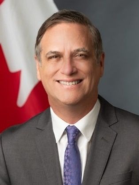
Keith Smith
When Keith Smith was tasked with leading Canada’s federal action plan to implement the United Nations Declaration on the Rights of Indigenous Peoples, he had less than two years to deliver it.
The plan would set out how Canada intended to advance Indigenous rights and reconciliation, working alongside communities with different histories, experiences and priorities.
Smith, a member of the Thessalon First Nation and now Canada’s High Commissioner to New Zealand, also had a personal connection to what was at stake.
He needed to assemble a team of around 30 people. With the Covid-19 pandemic forcing much of Canada’s public service to work remotely, he saw an opportunity to recruit differently.
Rather than recruiting primarily in Ottawa, Smith brought Indigenous staff into the project from across Canada, including British Columbia, Manitoba and Nova Scotia.
“People wanted to see themselves reflected in the work that was being done and they did,” he says.
Speaking to the Institute of Directors Rainbow Directors’ Network in Auckland in October, Smith drew a distinction between representation and meaningful participation.
“Many of us have experienced what it feels like to be invited to a table without truly being included in the conversation. You have a seat. You have a nameplate. But your perspective is not genuinely influencing decisions.”
Smith questioned the tendency for organisations to recruit people with different backgrounds and experiences, only to expect them to adopt established ways of thinking.
“If boards recruit people because they bring a different lens, then they must also create conditions that allow that lens to be used.”
Smith joined Canada’s federal public service in 1993, starting in an administrative role that included photocopying documents.
Over the following three decades, he progressed through management and senior policy roles, working across human rights, justice reform and Indigenous affairs before becoming High Commissioner to New Zealand.
He has also been openly gay throughout his career, a conscious decision at a time when there were few openly gay senior leaders in the public service.
“If people knew someone who was gay, they would be more open and understanding of the gay community and of gay people,” he says.
His own experience was largely positive. He felt safe in the public service and found opportunities to progress without concealing his identity.
During his time at the Canadian Human Rights Commission and later as Director of Policy to Canada’s Minister of Justice, Smith contributed to work aimed at strengthening legal protections for transgender and gender-diverse Canadians.
The proposed changes would explicitly recognise gender identity and gender expression in Canada’s human rights legislation. Some questioned whether they were necessary when existing protections were already being interpreted to cover transgender people.
Smith wanted that recognition written into the legislation. It would mean people no longer had to rely solely on how existing provisions were interpreted to see their identities expressly acknowledged in law.
He recalls that some transgender people felt more comfortable speaking with him because they knew he was openly gay.
“Good governance requires constructive discomfort,” he told directors at the Rainbow Directors’ Network dinner. “If everyone around the board table agrees all the time, it should probably raise some concerns.”
He offered directors a question to consider: “What perspectives are missing from this conversation?
“I do not stop being Indigenous when I walk into a boardroom. I do not stop being gay when I attend a diplomatic event.
“The pursuit of Indigenous representation, gender equity, disability inclusion, Rainbow inclusion and broader cultural diversity are not separate projects. They are part of the same effort.
“Many organisational failures are not caused by a lack of intelligence. They are caused by a lack of challenge.”
Smith’s connection with New Zealand began well before his appointment as High Commissioner.
In 2016, he accompanied Canada’s first Indigenous Minister of Justice on a visit that included meetings with Māori leaders, Cabinet ministers and then-Attorney-General Chris Finlayson.
The visit took them through Auckland, Rotorua, Wellington and Christchurch, with discussions covering Indigenous rights, justice and other matters of shared interest.
When Smith later applied to become a Head of Mission, New Zealand was his first choice.
He was attracted by the relationship between the two countries, including their shared commitments to democracy, human rights and their respective journeys towards reconciliation with Indigenous peoples.
In his time here, he has been struck by how accessible New Zealand’s political, business and community leaders are compared with those in Canada’s much larger federal system.
His diplomatic responsibilities also extend to Samoa, Tonga, the Cook Islands and Niue.
Earlier this year, the Canadian High Commission helped bring together several diplomatic missions to participate in Wellington Pride under the Diplomats for Equality banner.
“What struck me most was not the parade itself. It was the response afterwards,” he told the Rainbow Directors’ Network.
“Again and again, people spoke about visibility. Again and again, people spoke about authenticity.”
People told him that seeing Heads of Mission participate openly mattered because it demonstrated that support for inclusion extended to the highest levels of their organisations.
“Culture is not created by what organisations say. Culture is created by what leaders do.”
Smith refers to a principle found in some First Nations traditions that asks leaders to consider the consequences of decisions seven generations into the future.
“What is the impact of what you’re choosing to do now in seven generations?” he asks.
The approach has parallels with intergenerational thinking in Māori governance, where responsibilities to future descendants can influence decisions about land, resources and community wellbeing.
Having worked to advance Indigenous rights and legal protections for transgender Canadians, Smith is conscious that gains made by one generation are not necessarily guaranteed to the next.
“Leaders have a responsibility to actively protect and advance inclusion for future generations,” he says.