The risk behind a strong CEO scorecard
Good numbers can leave culture, succession and conduct under-examined unless boards build scrutiny into the year.
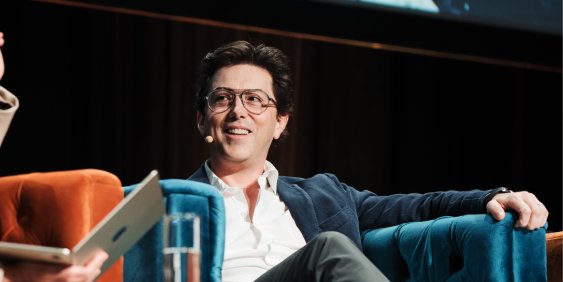
Joe Aston tells directors that ignoring red flags and over-relying on CEOs leaves boards exposed.
Corporate reputations don’t collapse overnight. They erode – often in plain sight, as boards turn a blind eye.
One of the most spectacular examples was Qantas, which fell from being one of the world’s most trusted airlines to one of Australia’s most criticised brands. The story wasn’t just about planes, passengers or profits – it was about governance.
Qantas’ reputational collapse was the culmination of a series of actions that Australian journalist Joe Aston described as exploitative and unethical.
“They illegally sacked their workforce. They used Covid credits that were highly unethical. They price gouged. They were doing ghost flights,” he said, referring to the sale of tickets for cancelled flights. “The ACCC [Australian Competition & Consumer Commission] took them to court . . . and that’s when it exploded.”
After years of strong financial performance, signs of decline at Qantas emerged in stakeholder relationships, customer sentiment and reputation. Yet the board remained loyal to CEO Alan Joyce.
Aston – best-selling author and one of Australia’s most provocative business commentators – delivered some harsh truths at the 2025 Leadership Conference.
Having thrown his life and work into some of Australia’s biggest corporate scandals – from Qantas to Rio Tinto – Aston has seen how once-great companies can plunge into crisis, and what directors must learn from it.
In 2024, he published his first book, The Chairman’s Lounge: The Inside Story of How Qantas Sold Us Out – a masterclass in investigative journalism.
Leadership failure, he told directors, is rarely sudden. Rather, power isolates – and over time, judgement can erode. “There are striking examples of leaders losing their grip on reality,” he said. “These failures are human, and all of this job is about judgement.”
Long CEO tenures can distort governance dynamics, he said. “By the time Covid arrived, Alan Joyce had already been CEO for 12 years. That’s too long for a public company, except under exceptional circumstances.”
Aston acknowledged the human pull of prestigious roles. “Anyone would die to get on the board of Qantas, Air New Zealand or Virgin Australia,” he said. “They’re absolute trophy positions – because you’re at the centre of things, and as humans, that’s where we want to be: at the centre of the action.”
That desire, he suggested, can blur independence and affect judgement over time.
“Powerful people become decoupled from the subliminal social systems that we are linked to all the time. Research shows that when someone is placed in power, they often become blind to feedback. And the longer they stay, the more out of touch they become.”
What troubles Aston most is not that red flags don’t exist, but that they are overlooked. “You only see the disaster when you allow the disaster to happen.”
He emphasised the importance of staying grounded in external realities, saying: “I don’t think enough value can be put on getting an honest external perspective.”
He criticised the disconnect between shareholder expectations and board accountability. “Too often, the second that company directors are appointed to a board is the last moment they are there to serve shareholders – they’re there serving each other.”
For Aston, the deepest governance failures are cultural, not technical. “Companies talk about culture as if it’s monolithic. In reality, culture is set by very few people at the top, and everyone then adapts to behave like them,” he said.
“Things can become too collegiate,” Aston noted, especially when social closeness blunts honest feedback. “It becomes really hard – to walk into the boardroom and talk to that person about their failures.”
He pointed to executive leadership as the key influence. “I look at companies that have really good culture . . . and it’s just because they have really good, high-performance CEOs and GMs.”
Above all, Aston stressed, governance rests on director judgement. “This is really the big challenge with being a director. And we dress it up in processes and structures – all of which are important. But what shareholders are paying directors for is to exercise judgement.”
He added: “There are all sorts of courses you can do, but what I want in a chairman is someone with some good experience and a finely tuned radar. That is the skill that is important. Now, can you teach that? I don’t know.”
Aston also warned against being dazzled by charisma. “Quite often you find very charismatic CEOs whom the board has fallen in love with,” he said. That closeness, he argued, can make it harder for directors to challenge poor decisions – even as warning signs build.
It was a pointed end to a conference that had already highlighted trust, ambition and humanity as the future of governance – with Aston reminding directors that without sound judgement, none of those themes hold.