
Who on the board really knows the business?
Drawing on experience across radio, government and the boardroom, Steven Joyce stresses the importance of sector expertise and independent…
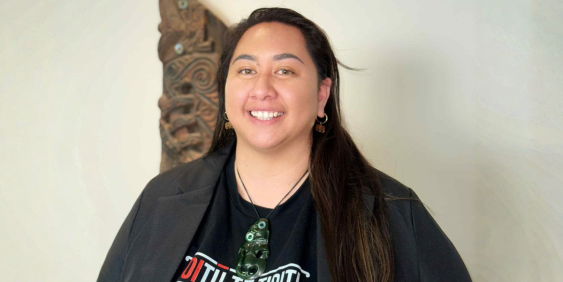
A younger voice at the table, Kataraina Monika MInstD draws on whakapapa and intergenerational thinking to support future leaders.
Kataraina Monika MInstD resides in the beautiful coastal region of Eastern Bay of Plenty, Te Moana-a-Toi-te-Huatahi, where she works as Strategic Business Partner for Te Whare Wānanga O Awanuiārangi – an indigenous tertiary organisation dedicated to building cultural and academic excellence, strengthening capability and supporting the revitalisation of te ao Māori.
Alongside this, her interest in youth, indigeneity, iwi and community social impact, and seeing faces like hers in governance has led her to take on board roles with Te Puna Ora O Mataatua and Trust Horizon.
This week, she explains what it means to be a younger voice at the table, why she’s drawn to mentoring the next generation and how one book has empowered her thinking around the importance of intergenerational impact.
One book that really stands out is Māori Millionaire by Te Kahukura Boynton. It’s not a governance book in the traditional sense, but the whakaaro (thought, opinion, understanding, idea, or intention) around money, mindset and intergenerational wealth shifted how I think about leadership, responsibility and long-term decision-making.
It’s written in a relatable and straight-up style, and feels like someone having an honest kōrero with you rather than talking at you. It’s practical, grounded and empowering, and it blends personal stories with clear guidance. It’s the kind of book that makes complex ideas about money and systems feel accessible.
What drew me in was the focus on financial literacy through a Māori lens and that it was written by another young mana wāhine. That immediately made it feel more relatable. A lot of books talk about wealth and success, but not many are centred around Māori values, whakapapa and the idea of building wealth not just for yourself but for future generations.
Seeing someone from the same generation speak openly about money, mindset and breaking cycles resonated. It reinforced that we can change the narratives we’ve inherited and create different pathways for ourselves and our whānau.
The book talks a lot about intergenerational impact and that aligns strongly with governance. Decisions made today affect whānau, communities and future leaders. It reinforced the importance of long-term and collective thinking – a reminder to think beyond immediate outcomes and consider how systems, opportunities and resources can be strengthened for those coming after us.
They are a way to keep expanding how I think. Governance doesn’t exist in a bubble, so hearing different perspectives, whether that’s about leadership, money, culture or social change, helps me reflect on my own approach and the kinds of questions I bring to the table. Sometimes it’s less about finding answers and more about challenging assumptions.
What surprised me most is that I serve on boards in sectors where I had no previous experience or formal training – one in social and health, and the other an energy trust – and I’ve still been able to contribute in meaningful ways. Both organisations are ultimately focused on community, people and charitable outcomes, which are things I’m really passionate about.
That has helped me engage confidently and bring my perspective to the table. It’s also shown me that governance isn’t just about being a technical expert in a sector. Values, lived experience and a willingness to ask questions and learn are just as important. I’ve also appreciated being part of boards that are open to younger voices, Māori perspectives and values-driven thinking because that diversity really strengthens the conversations and decisions being made.
I’d like to see boards be more willing to challenge some of the traditional governance structures. For example, sharing leadership in different ways, having others around the table taking turns chairing discussions, or creating space for different voices to lead conversations.
I’d also like to see young people brought into governance spaces, not just as advisors or observers, but as decision-makers. If the future is going to be shaped by the decisions we make today, then those perspectives should be part of the governance process now.
That doesn’t mean throwing them in the deep end and hoping they can swim. A great board creates the space – emotionally and physically – and the support to mentor younger members, so they’re not just present but set up to contribute and lead.
Another thing I think about is self-awareness at the board table and knowing when you’re still actively contributing and when it might be time to step aside and make room for fresh thinking.
Ultimately, I’d love to see governance that is deeply values-driven. When boards are clear on their values and purpose, it becomes easier to challenge old ways of doing things and focus on what truly serves the communities we’re responsible for.
If you have a book, podcast or other media in mind that you would like to review, please contact sonia.yee@iod.org.nz