
Making himself visible, making space for others
Canada’s High Commissioner Keith Smith has spent three decades advancing Indigenous and Rainbow rights. He wants boards to value difference.

Relying on data without understanding the context can leave directors overlooking the experiences of communities affected by their decisions.
What happens when directors rely on metrics to inform their decisions but fail to see the hidden risks? And what are the consequences for wider stakeholder communities?
These were among the many conversational threads covered in the latest episode of Board Talk: Off the Cuff, recorded live at this year’s IoD Leadership Conference.
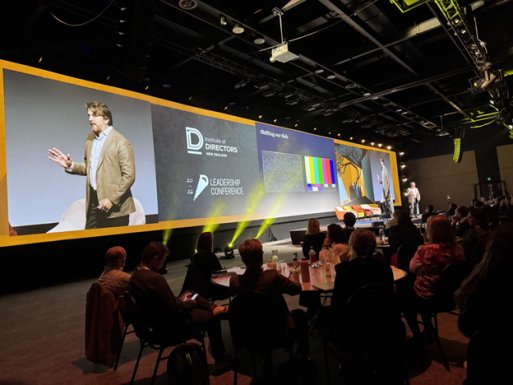
While there was plenty happening on stage, podcast producer Sonia Yee spoke to directors from across the motu about the importance of economic growth, innovation and capability-building, unconscious bias and racism in recruitment, barriers to inclusive organisational culture, historical pay equity issues in the health sector, collectivism beyond the boardroom, and the importance of trust in the chair-CEO relationship.
The presentations sparked plenty of discussion, including opposing ideas. On the topic of data, one speaker argued that advances in technology have left society better off. Yet not everyone in the audience agreed, particularly given inequalities in access to the technologies supposedly helping people get ahead.
“The flip side of that for example, here in New Zealand, inequity is something that actually caters to the algorithmic denominator, and we know the algorithm is biased,” says Ripeka Evans MInstD.
She questioned whether the research and assumptions underpinning the presentation reflected the experiences of communities in Aotearoa.
“The starting point … his assumptions, his research. I want the evidence to prove that inequality is equal,” she said.
For directors, treating data as definitive risks overlooking the circumstances of the people and communities affected by their decisions.
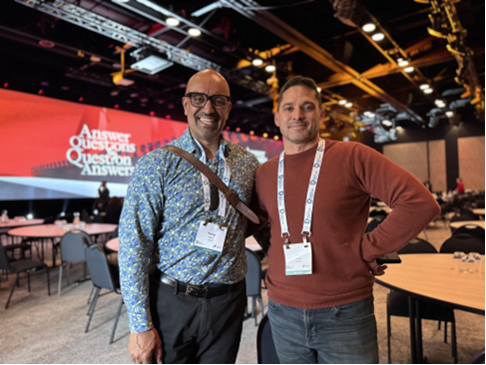
Tama Kirikiri CMInstD and Lee Grace MInstD have their eye on the missing gaps.
Evans’ concerns were echoed by Tama Kirikiri CMInstD, who sits on the board of a mental health and addiction service.
“You’ve got all the economic data in the world which allows you to do these projections, but you completely overlook the context [because] poverty is an outcome from actions that happened 100, 200 years ago. The echo of those events is still very real,” Kirikiri says.
History can tell us a lot. It shapes our identity and lays the foundations for social structures that haven’t served all New Zealanders equally.
For Kirikiri, that’s why discussions about economic growth need to consider the historical circumstances that continue to shape communities today.
While the conference speaker highlighted the benefits of technological progress, Kirikiri questioned whether those benefits could be fully understood without that context.
“There are some things that are not just about growing an economy that will fix [the current issues],” he said.
A panel discussion on vulnerable customers, particularly the risk of stakeholders falling through the gaps, resonated strongly with him.
“There’s probably a whole lot of stuff that isn’t visible that we’re not certain about,” he said.
“Never make assumptions on either what you are or what you’re not hearing. There’s a lot of risk in that.”
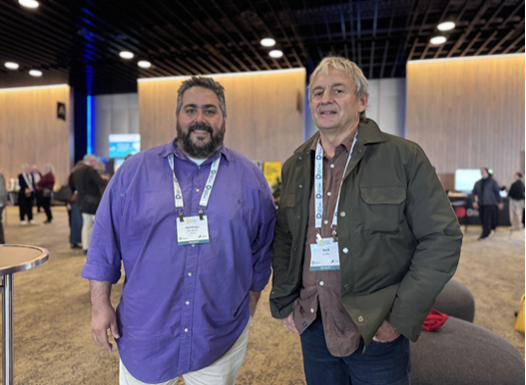
Santiago De Marco MInstD and Neill Culley believe organisations need to embody their values.
Creating positive outcomes and building the culture of an organisation from the ground up was another topic of discussion. Many organisations attempt to create culture through posters and positive messaging plastered on a wall, but if that culture is not embodied by individuals, including leaders and directors at the top, attempts to create a positive workplace will land as flat as those posters.
“You have to invest in creating the conditions … to bring that to action. It’s not something that you just have on a piece of paper,” said the chief executive of Hōhepa Hawke’s Bay, Santiago De Marco MInstD, who attended the event with board chair Neill Culley.
For De Marco, building an inclusive and culturally safe organisation means finding ways for different voices to be heard and their needs addressed.
“How are we engaging and finding the right ways that those voices are heard, seen, and we act upon serving those needs?
“The challenge is always to find those pathways that include everybody in the story,” he said.
Listen to the latest episode of Board Talk: Off the Cuff for conversations with directors and leaders from the technology, not-for-profit and other sectors.
Special thanks to the participants in this episode: Don Christie MInstD, Tama Kirikiri CMInstD, Lee Grace MInstD, Ripeka Evans MInstD, Laura Mear, Mads Moller MInstD, Rob Clark, Neill Culley, Santiago De Marco MInstD and Dr Darran Lowes CMInstD.