Why representation doesn’t translate to influence
Research has found women of colour face distinct barriers in leadership. What cultural and boardroom obstacles are at play?

Pasifika leaders bring valuable governance capability, but can still be overlooked because of unconscious bias.
Walk into any boardroom in Aotearoa New Zealand, and you’re likely to see a snapshot of power – who holds it at any given moment, and who shares it with generosity and grace.
But waiting in the wings is an undiscovered voice of Pasifika leaders who are highly skilled, community-driven and understand the power of collective vision. Regardless of the capability that exists, this depth of skill and knowledge has largely remained untapped – until now.
In this latest episode of Board Talk – Off the Cuff, we dive into what it really means to strengthen Pasifika voices on New Zealand boards – a crucial ingredient for the future of decision-making.
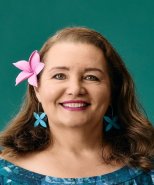
Mele Wendt MNZM, MInstD
“If you’re not at the table, you’re on the menu,” says Pōneke director Mele Wendt MNZM, MInstD, with razor-sharp clarity.
Wendt has been sitting on boards for more than two decades and is all too familiar with the challenges Pasifika directors are up against. Earlier in her board roles she was “often the youngest, the only brown person and . . . a woman”.
“There is ageism, sexism, racism . . . and it’s often very subtle,” says Wendt of the negative stereotypes that continue to pervade the boardroom and beyond.
Undeterred as “a proud Afakasi woman”, Wendt attributes her strong ties to identity and cultural heritage as what has anchored her at the table, even when things get tough.
“Board opportunities are competitive . . . and if they’re not advertised, they’re done on a ‘who you know’ basis,” she says.
To build the foundations for the next wave of Pacific directors, the IoD is committed to ensuring there are opportunities that build capability and growth.
Wendt is actively involved in contributing to these initiatives, including the Tautua Pasifika Mentoring Programme, now two years running, and as a member of IoD’s Pacific Advisory Board.
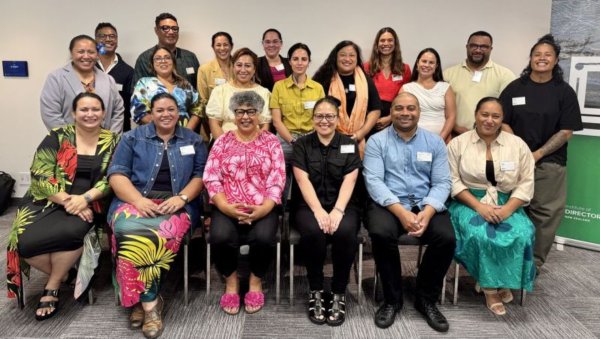
IoD Tuatua Mentroing Programme participants 2026
Wendt believes the cultural gap on boards has nothing to do with a lack of capability or readiness, but with a system that has yet to fully recognise the impact of diverse perspectives that strengthen governance.
If boards are not prepared to broaden their long-term vision by introducing diverse lenses, opportunities will be missed. Wendt says Pasifika peoples come with ready-made governance experience, steeped in a shared history of collective decision-making and communal accountability. These skills are embedded through community, church and family life, often within “complex hierarchical structures”.
They also bring a strong sense of humility. At the outset, this can be misread through a Western lens as a lack of confidence, with a risk it becomes internalised.
At a recent IoD ‘Pacific Directors Connect Event’, supporting the pipeline of Pasifika directors, one attendee put it simply: “Humility is a superpower”.
Wendt agrees. Her commitment to guiding and supporting the next generation of Pasifika directors combines creating visibility, building understanding and showcasing the many benefits of having Pacific voices at the table.
“You increase your cultural intelligence when you’re working with people who are quite different from you. It’s colourful, dynamic and educative. You make better decisions because you have lots of different perspectives, with each respected for their different views,” says Wendt.
Listen to the podcast below to hear more from Mele Wendt and learn about emerging Pasifika leaders ready and waiting to create change. Greg Dearsly also discusses the importance of cultural intelligence and why boards run a risk if they don’t know what’s happening on the ground.