Why representation doesn’t translate to influence
Research has found women of colour face distinct barriers in leadership. What cultural and boardroom obstacles are at play?
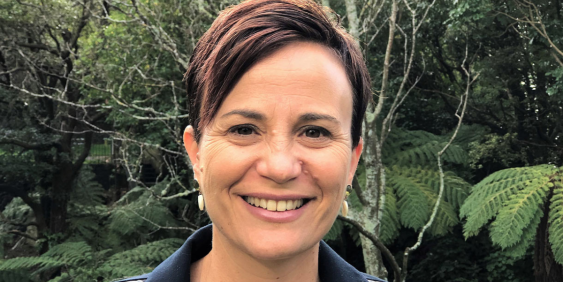
Paula Tesoriero MNZM says organisations that include disabled people can better understand the people they serve.
One in six people in New Zealand – 17% of the population – are disabled, but their unemployment rate is around twice that of non-disabled people.
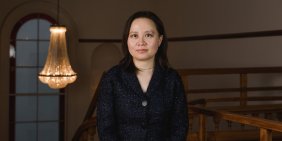
Whaikaha - Ministry of Disabled People Chief Executive Paula Tesoriero MNZM says under-representation of disabled people, in governance and the workforce, means organisations are missing opportunities to better understand their workforce, customers and communities.
Tesoriero will speak at the IoD’s 2026 National Leadership Conference on 3-4 September at Tākina Convention and Events Centre, Te Whanganui-a-Tara, Wellington.
“I’m really wanting to challenge misconceptions people may have around disability in employment and governance,” says Tesoriero, who has been chief executive of Whaikaha since its inception in 2022.
“I want to talk about what having disabled people around the governance table, and in the workforce, can bring to an organisation in designing products and services that really cater to that substantial part of the population that are disabled.
“As directors, there’s a big opportunity to talk about who is at your table but, more importantly, who is not.
“If you have no disabled people in governance or in the workforce then you have to ask, ‘why not, when 17% of people are disabled’ – and what barriers can we address?”

Tesoriero was Disability Rights Commissioner from 2017 to 2022 and Acting Chief Human Rights Commissioner from 2018 to 2019. She is a Paralympic gold medallist and has served in senior management roles at the Ministry of Justice and Statistics NZ.
Her governance service has included deputy chair of Peke Waihanga – Artificial Limb Service, deputy chair of Nuku Ora (previously Sport Wellington) and Paralympics NZ.
She is a life trustee of the Halberg Disability Sport Foundation and an honorary advisor to the Asia New Zealand Foundation.
To unlock the potential of the ‘one-in-six’, Tesoriero says the conversation needs to focus on the market edge disabled people bring to an organisation.
“This is not ‘because this is a nice thing to do’, but because of the benefits to the organisation. Statistics show that three-quarters of unemployed disabled people in New Zealand want to be in work and that provides a significant opportunity for supporting economic growth.
“There’s an opportunity, economically and socially, to turn things around by deliberately focusing on getting more disabled people into employment and governance.
“There are many studies showing the benefits diversity brings to a workplace. Many disabled people have great ability to think outside the box and create innovation and adaptability because that’s what we have to do every day.
“Disabled people bring a huge range of skills, talents and abilities to the workforce, they are loyal to organisations and often stay longer in roles.”
Whaikaha is working with the IoD to lift representation of disabled people on boards and has a database of disabled people with governance experience or seeking governance experience.
Whaikaha created oneinsix.nz in collaboration with the NZ Disability Employers. Launched at an event hosted by the Wellington Chamber of Commerce, it provides tools to support employers in employing disabled people.
Tesoriero says removing barriers to employment for disabled people takes leadership from boards and management.
“Leaders set the strategy, direction, tone and culture of an organisation and all those things are important if we are going to unlock the potential we have of employing disabled people.
“There are a vast range of barriers – transport, educational opportunities, the physical spaces and places of buildings and streetscapes.
“Leaders can start by asking whether the organisation has disabled people. They can set a tone that welcomes and is inclusive for disabled people, from the outset of the recruitment process.
“They can implement reasonable accommodations well and they can have disabled people in governance.”
Tesoriero says that requires an approach to leadership that benefits an organisation as a whole.
She says organisations need “leaders who are curious about people, who see the opportunities diversity brings to their organisation and who understand how to unlock potential by deliberately seeking out those skills and talents”.
“That requires good strategic insight, authenticity and setting a vision, culture and tone for the organisation and taking deliberate steps through connecting with the workforce that will deliver on that vision. In my view, leadership across the spectrum requires those attributes.
“If organisations want that edge, if they want to be sure what they are offering to 17% of the population is designed in such a way that there will be uptake of those products and services – then they need disabled people on boards and in the workforce to inform that.”
The IoD’s National Leadership Conference brings together more than 500 directors and business leaders for two days of governance discussion and networking on 3–4 September at the Tākina Convention and Events Centre in Wellington. Local and international speakers will discuss governance and leadership issues affecting Aotearoa New Zealand and the wider world. Register here.