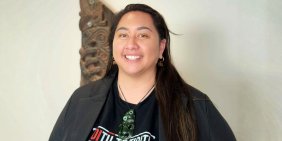
My governance playlist – Kataraina Monika
A younger voice at the table, Kataraina Monika MInstD draws on whakapapa and intergenerational thinking to support future leaders.

Governance decisions are never neutral. Dr Jess Keepa MInstD reflects on power, wellbeing and who boards are really accountable to.
Dr Jess Keepa MInstD has a background in general practice and clinical leadership, with board roles that align with her commitment to community-led organisations, values-based governance, primary care and hauora – a holistic Māori framework encompassing physical, emotional, social and spiritual wellbeing.
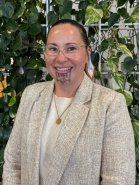
Dr Jess Keepa MInstD
These spaces enable her to support better outcomes for whānau, with a strong focus on equity. Currently, she is a member of the Council of Medical Colleges (CMC) and Ngāti Porou Oranga – a charitable trust and subsidiary of Te Rūnanganui o Ngāti Porou – the iwi’s post-settlement governance entity.
Based in Te Whanganui-a-Tara Wellington, she is a general practitioner and hauora Māori leader with the Royal New Zealand College of General Practitioners.
This week, she shares a book that reveals why governance decisions are never neutral.
Drawing on my background in primary care and hauora Māori, the book that most deeply shapes my thinking is Ora: Healing Ourselves: Indigenous Knowledge, Healing and Wellbeing, edited by Leonie Pihama and Linda Tuhiwai Smith. While it isn’t framed as a leadership or governance text, it powerfully centres indigenous ways of being, knowing, healing and wellbeing. These foundations shape how I think about leadership, accountability and decision-making at a governance level.
The writing is scholarly, reflective and deeply grounded in lived experience. It challenges dominant Western paradigms of health and wellbeing, while affirming indigenous knowledge systems as rigorous and transformative.
I was drawn to the book for it unapologetic centering of indigenous worldviews in health and healing. It resonates strongly with my work in primary care, where wellbeing cannot be separated from whakapapa, whānau and whenua. It speaks to health as something not delivered to people, but held collectively within communities.
It has reinforced that governance decisions are never neutral. They land in real communities, affect real lives and have the potential to shape futures across generations.
It has also strengthened my commitment to long-term thinking – making decisions today with an intergenerational lens, mindful of the legacy we leave for our tamariki and mokopuna.
I regularly listen to Board Matters, BoardPro Podcasts, and Taringa. These help to translate theory into practice, particularly when leaders speak honestly about power, tension and complexity rather than idealised governance models.
I enjoy reading novels and pūrākau (traditional Māori stories, myths and legends) with my tamariki. It keeps me grounded and connected to what matters most.
Workforce sustainability in primary care, cultural safety and equity are front of mind. I’m also thinking a lot about how boards hold accountability to communities, not just compliance frameworks or financial performance.
What has surprised you most about yourself – and others – while serving on boards?
I’ve been surprised by how often ‘courage’ in governance looks like slowing down and holding space – pausing, asking curious questions, naming discomfort and challenging assumptions around the status quo.
I’d like to see more values-based decision-making. In particular, a deeper understanding that partnership means co-creation, not consultation – building with communities, not for them. That requires boards to take time to understand what success looks like from the perspective of the communities they serve, how wellbeing is understood in that context and how accountability is defined. When boards are willing to slow down and engage in that way, decisions are more durable, more legitimate, and ultimately more effective with impact that extends beyond the present and into future generations.
If you’d like to submit a review on a book, podcast, film, documentary or other medium, please email: sonia.yee@iod.org.nz