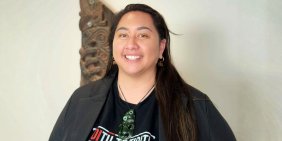
My governance playlist – Kataraina Monika
A younger voice at the table, Kataraina Monika MInstD draws on whakapapa and intergenerational thinking to support future leaders.

Ana Ika shares how faith, service and one powerful book reshaped her view of governance – and why purpose must always stay anchored.
Hailing from South Auckland, Ana Ika is of Tongan descent, and a mentee on the IoD’s Tautua Pasifika Mentoring Programme. A Senior Social Policy Analyst/Advocate (Social Policy and Parliamentary Unit) for The Salvation Army, she is a trustee for the Papatoetoe Adolescent Christian Trust (PACT). She has an extensive background in youth support, advocacy and experience in health research, with a governance interest in the not-for-profit sector.
She shares why one book ignited an interest in governance, including dispelling myths about what directors look like, and why being part of the for-purpose sector in this current climate is like trying to solve a Rubik’s Cube.
I wouldn’t say it’s a governance book in the traditional sense, but Mission Drift: The Unspoken Crisis Facing Leaders, Charities, and Churches by Peter Greer and Chris Horst really shaped my thinking – it’s what led me to governance. When I used to think about boards or directors, I imagined elite and important people making smart decisions, and I didn’t see myself in that image. But after reading Mission Drift, it opened my eyes to how critical governance is. It helped me understand the role boards play in setting strategic direction, staying true to the mission, and safeguarding organisations so they don’t compromise on their purpose.
It spoke about real experiences. It gave examples that I could understand, backed by evidence, and it didn’t just float ideas. It showed what happens when governance goes wrong, especially when boards lose sight of their mission.
I was given the book after a decade working in the youth sector – work I absolutely loved. I was moving into a policy role, which meant I wasn’t in the trenches anymore. Suddenly, I was thinking more strategically and I was also representing the organisation in public spaces. That came with a new kind of responsibility: how do I protect and steward the brand, while still advocating for our families and communities?
The book helped frame that transition. It showed me what it means to safeguard purpose – especially in roles where your work is visible and influential.
What really stuck with me was the idea that even with the best intentions, it’s easy to drift from your core purpose if you don’t have a clear anchor. Clarity of mission isn’t just a nice-to-have – it’s essential. Especially when our work constantly feels like swimming upstream.
It’s a challenging time, especially for the for-purpose sector. One thing that stayed with me is that mission drift isn’t usually a deliberate choice. Organisations didn’t have safeguards in place to keep their purpose anchored, and over time, things such as donor influence, cultural pressure and internal leadership changes started to shift direction.
That kind of drift doesn’t happen overnight – it’s gradual. And before you know it, the organisation looks very different from what it was originally set up to be. But for me, being part of a faith-based organisation, staying true to our Christian mission is absolutely vital.
So, when I’m in board discussions – whether it’s about funding, staffing or navigating uncertainty – I’m always thinking: How do we protect that core? How do we stay faithful to who we are, even when the pressure to compromise is real? And what’s the cost of not compromising? Could that affect our sustainability in the long run? These are the kinds of questions Mission Drift helped me frame with clarity and conviction.
I’m still pretty new to governance. Through the Tautua Pasifika Mentoring Programme, I’ve been introduced to some amazing resources, including podcasts and readings. That’s been super helpful because, to be honest, you don’t know what you don’t know – and I didn’t know a lot! As the saying goes, experience is the best teacher, so I’m still learning.
I read books that nourish my Christian faith – that’s foundational to who I am. There’s a saying, “Keep the main thing, the main thing,” and for me, that’s my relationship with God. I read the Bible, and books on spiritual formation and apologetics.
Right now, I’m reading Spiritual Disciplines for the Christian Life by Donald S. Whitney. It was written in 1991, but it’s still incredibly relevant. One quote that stood out is from Vance Havner: “The alternative to discipline is disaster.” That’s not just a faith-based truth. It applies to all areas of life, including governance. Even when I’m reading outside of governance, I find the lessons often cross over.
I think of it like Psalm 23: “My cup overflows.” That’s the posture I want to bring to everything – to operate from a place of overflow, not depletion. It’s like the plane analogy: put your own oxygen mask on first. The books I read help fill my cup so I can lead with clarity and serve well.
Funding. It’s tight in the for-purpose sector and that affects our operations, staffing and programmes. These aren’t just financial decisions. They impact real people. It also raises sustainability questions: how do we move beyond being so dependent on contracts and grants to survive? Sometimes it feels like trying to solve a Rubik’s Cube – move one piece and everything else shifts. You’re constantly trying to balance all these moving parts while staying true to your mission – not just for today, but for the long term.
Realising that governance isn’t just for the elite. There’s often a perception you need to have a certain background or status to be at the board table – but that’s not true. Governance is about service. Being part of the Tautua Pasifika Mentoring Programme – the word tautua comes from the Samoan saying, “O le ala i le pule o le tautua” – the path to leadership is through service. (And just to note – I’m Tongan!) But that idea rings true to me.
I still admire seasoned directors – there’s so much to learn from their experience. But it’s encouraging to realise we’re all there to serve, bringing whatever skills we have in our back pocket. Everyone brings something different to the table and that diversity of thought is powerful.
More young people, especially those under 40. In governance, that’s considered young. There’s often a big generational gap and I think we’re missing out by not having younger voices in the mix.
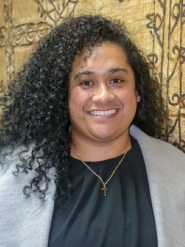
Ana Ika
Younger directors bring insight, especially in a fast-changing world. Different generations see things differently. Rather than a divide, we need more of a generational melting pot. Governance isn’t just about experience – it’s about perspective, collaboration and service.
Here’s my challenge: is there someone in your world under 40 you could introduce to governance? Maybe invite them to an event or workshop. A simple invitation might help them take that first step – just like someone did for me.
If you have a book, podcast, or other media in mind that you would like to review please contact sonia.yee@iod.org.nz