Thirty-five years on, the CDC widens its lens
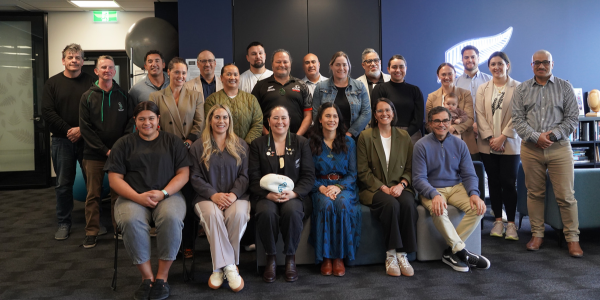
The governance fundamentals remain the same. At Waiwhetū Marae, participants brought whakapapa, tikanga and mokopuna into the room.

Tai timu, tai pari – a Māori-led pathway is growing leaders and empowering them to bring their whole selves into decision-making roles.

Merewaakana Kingi
Merewaakana Kingi (Ngāti Awa, Ngāitai, Tūwharetoa ki Kawerau) MInstD still remembers the moment it clicked.
“I was sitting there thinking, we’ve got incredible Māori leaders across the rugby system – but we didn’t actually know who they all were. We hadn’t collected that data, and we hadn’t connected the dots,” she says. “That’s when I knew we needed something tailored, practical and Māori-led.”
Kingi, an independent board member of the New Zealand Māori Rugby Board, seasoned CFO and former Black Fern, saw an opportunity to connect and uplift Māori governors across the game.
The inspiration came from both a strategic imperative and a deeply personal place. “We needed to empower Māori in the rugby system to participate more confidently in governance. And I’m always scanning for future leaders – that’s my leadership style. I love to see people grow.”
That something became the Māori Governance Essentials programme – a one-day pilot workshop designed by the New Zealand Māori Rugby Board and delivered in partnership with the New Zealand Māori Rugby Board, NZR and the Institute of Directors. It brought together emerging and experienced Māori governors from across rugby and beyond, weaving core governance knowledge with te ao Māori values, whakawhanaungatanga (the process of establishing relationships) and real-world rugby case studies.
“We’ve always seen rugby as a vehicle for growing leaders and a vehicle for te ao Māori,” says Kingi. “The goal was to strengthen Māori representation in governance, yes – but more than that, to empower people to bring their whole selves into those spaces, including in mainstream environments where they might feel culturally invisible.”

Kiriwaitingi Rei-Russell
IoD facilitator Kiriwaitingi Rei-Russell (Te Arawa, Ngāti Awa, Ngāti Toa) MInstD, herself a former Bay of Plenty Rugby Union board member, helped shape the course to reflect not just governance essentials, but a uniquely Māori approach.
“The participants were all leaders – some on the field, some in their communities, some in corporate – but most hadn’t been in a room like this before, all together,” she says. “Whakawhanaungatanga at the start was intentional. We didn’t rush it. We wanted people to feel safe, to connect and to bring their whole selves to the table.”

Les Elder
That sense of cultural safety resonated deeply with former Black Ferns captain Les Elder (Ngāti Tūwharetoa, Ngāti Maniapoto, Ngāti Hauā), who was recently appointed as the emerging director to the New Zealand Māori Rugby Board.
“Straight away, I felt comfortable because all aspects of me were represented,” she says. “My rugby journey, my values, my reo – I didn’t have to explain any of it. I could just be.”
Elder spoke candidly about what she hopes to bring to the boardroom: values-based leadership, effective communication and unity – even after disagreement. “As captain, I encouraged robust discussion behind closed doors – but once a decision was made, we were united. That’s something I’ll carry into governance, too.”
Like others, she acknowledged the areas she’s still developing. “Strategic thinking and financial reporting are my main focus areas.”
“Right now, I feel like I’m in exactly the space I need to be – learning, growing, giving back. This role lets me bring together my rugby career, my passion for Māori leadership and the chance to help others rise.”
Rei-Russell also emphasised the value of peer support. “You develop relationships on these boards – and when something sticky comes up, it’s powerful to know who you can call. That’s what makes this model different.”
Tk Buchanan
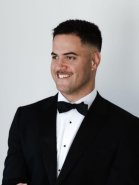
Tk Buchanan (Ngāi Tahu), Te Waipounamu Māori Rugby Board member and incumbent Waitaha Māori Rugby Chair, also attended the course. Buchanan is one of the younger generation of mana whenua Māori rugby directors. He represents an iwi voice at the table, alongside his governance attributes.
He stressed that governance shouldn’t stop at managing risk.
“Once your financial and operational risks are stable – what’s your next phase as a leader when you’re not putting out fires?” he asked. “That’s when your values need to take the lead. It’s not just about the money – it’s how you use it and who benefits from it.”
He reflected on board environments that can unintentionally overlook care and responsibility.
“I was in one meeting where the older members had travelled far, and there was no food. Just an oversight, but a big one. Those small things reflect the culture of your governance.”
Buchanan also highlighted the risk of tokenism. “What’s token,” he says, “is having a Māori board seat but not letting that person be Māori. Don’t just invite people in – make space for how they think, how they speak and how they lead.”
While the experience and backgrounds of participants varied, many shared a common thread: the importance of being Māori in a shared kaupapa and tikanga, and of bringing who we are to the table.
For Kingi, the course was just the beginning. “This was a pilot, but our aspiration is to stay with this cohort over three years – offer mentoring, more learning and keep building their governance journeys.
“Some will go on to Māori rugby boards, iwi boards, some into mainstream, and some will strengthen their own whānau trusts and marae. That’s success to us.”
Asked what she hopes participants took away from the day, Kingi’s answer is simple: confidence.
“You don’t need to know everything, but you need to know who you are and who you can call. And now they’ve got that – a network, a cohort and a kaupapa to belong to.”
As she puts it: “Tai timu, tai pari, ka ara tahi tātou. When the tide rises, we rise together.”