The risk behind a strong CEO scorecard
Good numbers can leave culture, succession and conduct under-examined unless boards build scrutiny into the year.

Boards must ‘rationalise how we go forward’ – a level of sophistication the former Te Whatu Ora CEO says is now essential in governance.
In an increasingly complex operating environment, the relationship between boards and their CEOs is evolving.
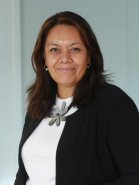
Margie Apa
Fepulea’i Margie Apa MInstD has seen how critical that is from “both sides” – as CEO and board director – and she feels organisations are evolving with it.
“There’s a time for boards and CEOs to work in strategic partnership together, to unpack problems and opportunities, explore potential scenarios and understand what matters in decision-making. Then, there are times when a board needs to be the independent thinker and decision-maker – the buck stops with them,” says Apa.
“Management needs to feel safe and comfortable to give their expert opinion, even if it’s not good news.
“Boards, however, have to be able to stand back, see a broader context – particularly the impact on stakeholders – and rationalise how we go forward and clearly explain the ‘why’. This is the sophistication in board leadership we are seeing more often.
“That’s critical because sponsors, funders, shareholders and consumers will scrutinise how you arrived at those decisions – particularly if things don’t go as planned.”
With more than 25 years’ governance experience alongside 22-plus years in executive leadership roles in large organisations, Apa is well-placed to reflect on that.
Her executive roles included 10 years at Counties Manukau Health as Director, Population Health and Strategy and later CEO, and three years as CEO of Te Whatu Ora | Health New Zealand.
Te Whatu Ora was a monumental merger of the 20 district health boards, their seven shared service entities and the transfer of functions from the Ministry of Health.
Establishing a new entity while recovering from Covid-19, ensuring service continuity and responding to pent-up demand for healthcare was next-level complexity.
By the time Apa left, Health New Zealand was responsible for $28 billion in funding, employing more than 82,000 people and partnering with more than 3,000 providers delivering care to the community.
“Partnering and working with others is a posture you must take when facing complexity. We don’t have all the answers and our perspectives can be biased.
“Change at that scale is rarely a linear exercise. Doing due diligence while the organisation was changing required partnering with experts across all the leaders in the system.
“Partnering doesn’t mean we always agree or compromise. It’s a negotiated relationship that values different perspectives while being mindful of our own accountabilities and responsibilities to our stakeholders. Building effective relationships and trust is key.”
Improving Māori health was one of the objectives Te Whatu Ora and Te Aka Whai Ora | Māori Health Authority were charged with before the latter was disestablished in June 2024.
Although established as separate entities, the governance and executive leadership worked in partnership to ensure solutions more likely to be effective for Māori were seriously considered.
“The simplest way to describe it is that we had to build trust – from the CEO level with Riana Manuel [CEO of Te Aka Whai Ora] and me down to our executive teams. Thankfully, most of our teams were already on board.
“This made working together more efficient, requiring less time to translate big ideas into action, like investing in Māori health priorities such as immunisation. This was modelled and led by our boards.”
Apa says she hopes that, even though Māori health is no longer led by a separate entity, the leadership to work in partnership with those impacted most by decision-making endures.
As a data-driven industry, she’s seen how technology has improved how health information is presented to decision-makers but also how too much data can be overwhelming.
In her experience, it’s emphasised the importance of judgement in governance.
“We need to be aware of our prejudices. We all enter decisions with bias. Boards have to be on their toes and focused on our purpose – resist being rushed if it’s important. Boards and management may have different positions on that journey and that’s okay, but if we want management to commit to execution, they need to understand the ‘why’.
Apa resigned from Te Whatu Ora in February 2025.
“I was committed to the transition period and bringing all my experience of change in health, while ensuring continuity of care and patient safety. We had very few disruptions to services post Covid-19 recovery and that’s a tribute to the goodwill of those working in health.”
She also recognised when it was time to move on as the organisation shifted gear.
“Whether as a board or a CEO, we have stewardship responsibilities for a relatively short time across an organisation’s life and having a reality check on leadership fit for each stage is key. That’s ultimately the job of the board and chair in partnership with the CEO.”
Apa has served on for-purpose, not-for-profit boards since she was 25. Her governance career has included 13 years with Presbyterian Support Northern and 14 years with World Vision. She is a trustee of World Vision New Zealand and has had six years as a board member of World Vision International.
“Many have been faith-based. I value contributing to a purpose bigger than me, particularly delivering great services to people in need and offering a great experience to donors and customers. It’s one of the ways I want to make a difference in this world – perhaps a cliché, but true.
“It’s also made me a better executive by understanding stewardship responsibilities within the broader context.
“My advice to those doing both is to consider carefully your capacity to add value. Look at the life cycle stage of an organisation you are considering governing.
“There have been times when major transitions like CEO change or board recruitment, or crisis facing an organisation have demanded more time as a governor. The organisation is entitled to have that focus from you as a board member – regardless of what you are being paid.
“My experience working in large systems at multiple levels and running large organisations has been useful at board level.
“No organisation or company is its own island. Few parts of our lives are not impacted by organisations and they, in turn, are impacted by the quality of governance. It’s a privilege to serve in these roles and I’m optimistic our governance practice is evolving to meet the challenges ahead.”