
Geopolitical climate reader
This reader explores how boards can understand geopolitical uncertainty, test its implications for strategy and make timely decisions as…

Many businesses pay for the same inputs multiple times. Circular thinking reframes this as a cost, risk and strategy issue.
There are parts of most businesses where we quietly pay for the same thing more than once. Packaging is one of them.
We pay to buy it. We pay to freight it. We pay to handle it. Then, once the product has been consumed, someone pays again to collect it, recycle it, dispose of it or manage the waste it creates. In other words, we are not just buying a product input. We are buying a recurring cost cycle.
This is why circularity belongs in the boardroom. It is often framed as an environmental issue or an operational detail. In practice, it is a cost structure question, a supply chain question, a growth question and increasingly a risk mitigation question.
The beverage industry is a good example. For many beverage producers, bottles represent more than 20% of total cost of goods. This excludes the cost of freight, storage, handling and end-of-life management. When a material input is that significant, the question is no longer whether it is recyclable. The more relevant question for boards is whether the business should be buying it again and again in the first place.
At Chia Sisters, that question led us to rethink one of the most basic assumptions in the beverage industry: that each serve needs its own package.
We began by reducing harm within the existing model. We chose glass over plastic from day one. We installed solar. We measured and reduced emissions. We replaced single-use pallet wrap in our own warehouse movements with reusable rope covers, saving around four cubic metres of plastic wrap each year. These steps delivered incremental improvements, but did not change the underlying model. We then looked closely at what we were buying again and again. One answer was single-use beverage packaging.
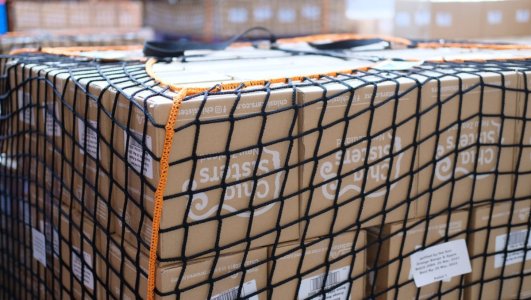
This led us to trial supplying juice in reusable kegs. The logic was simple. Instead of paying for a bottle, cap and label every time a customer bought juice, we could put the juice into a reusable aluminum keg, send it out, collect it, clean it and refill it. A single 30L keg refill can replace more than 100 single-use bottles, caps and labels. The keg itself is paid for once and reused many times.
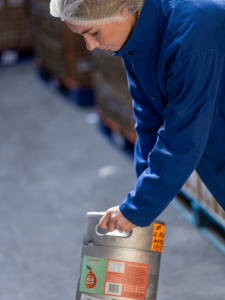
We were solving the same problem for our customers, who bear the cost of purchasing the bottle when it is full and then paying again for its disposal when empty. That cost is rarely reflected in the tender process, yet it is real.
The first lesson was that circularity is not magic. It has to work operationally. We initially assumed bars and pubs would be the obvious first market because they already have tap infrastructure. We then ran into the reality of tied taps and the commercial power of incumbents. After six months of effort, we had only a small number of bars serving our juice on tap. So we went back to the drawing board and looked for different customers and different economics.
We found better traction in higher-volume channels such as hotels, tourism operators and large venues, where bulk dispensing could reduce packaging, simplify service and improve the price per litre.
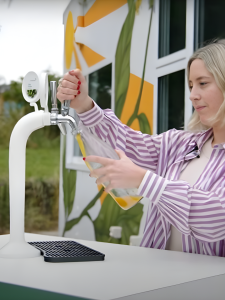 You wake up in a hotel, go down to the morning buffet, and fill your glass of juice from a dispenser. Few of us think about the tens of thousands of bottles poured into that dispenser, the financial and environmental cost, or the hours of labour involved.
We solved that problem, which meant we could compete in the mass volume space – for the first time competing with much larger international juice companies. It also opened a new channel for us. We were not previously supplying hotels, so this is incremental growth rather than a shift from existing channels. This raises a governance question: are boards adequately considering the risk of displacement by circular business models?
Since then, our packaging-free juice system has been supplied across a growing network of outlets. We have saved more than 10,000 plastic bottles from being created, equivalent to over two tonnes of plastic diverted, across around 22 outlets, with larger sites now in train, including Rydges Hotels and the recently opened New Zealand International Convention Centre.
Circularity changed the economics of the product for both our customers and us.
Instead of buying a packaging input for every unit sold, we shifted towards an asset that can be used many times. This shifts part of the cost base from variable to fixed and changes procurement, margin logic and the type of customer that can make sense. It also opens new channels. By reducing staff time and waste costs for customers, we established a position in a market that was previously inaccessible. There are other organisations designing out recurring costs.
Germany offers a large-scale example. Its deposit return system achieves a 98% return rate on eligible single-use drink containers and 57% of beverage containers are reused. Glass bottles can be reused up to 50 times and PET bottles up to 25 times before recycling. This is not a niche sustainability experiment. It is infrastructure built around the idea that value should be retained rather than discarded after one use.
Healthcare provides another example. Christchurch-founded Medsalv remanufactures medical devices that would otherwise be used once and sent to landfills. It now works with more than 90 hospitals across Australia and New Zealand, has saved more than 358,000 devices from landfills and says some devices can be used up to 14 additional times. The point is not only waste reduction. Products previously treated as disposable can be re-engineered into lower-cost, lower-waste and more local models.
Critical minerals offer a third signal. Mint Innovation is building city-scale, e-waste processing facilities to recover metals from landfills. Countries increasingly see securing supply of critical metals as a strategic advantage to support key industries and defence capabilities. As natural reserves of critical metals such as copper, cobalt, nickel and lithium decline, mining alone is unlikely to remain sustainable. By “mining” from landfills we can depend less on extraction and long supply chains.
Boards are increasingly focused on supply chain volatility and how to reduce risk. A circular approach to your business model – and providing one for your customers – should be a boardroom priority to reduce dependence on virgin inputs, repeated purchases and fragile supply chains, while opening opportunities with customers seeking similar outcomes.
The conversation has quickly moved beyond sustainability to discussions about cost of goods, capital allocation, procurement, route-to-market and resilience. In an economy where margins are tight, freight remains exposed and input costs rarely move in one direction, it is worth asking the question: Where, exactly, are we paying twice?
Chia Sisters will be providing delegates with a ‘brain boost’ at the power breakfast sessions on day two of the Institute of Directors National Leadership Conference, 3-4 September 2026, Wellington.