
Forestry governance: What you can model – and what you can’t
Kaingaroa Tipu is modelling its forest in extraordinary detail. Chair Jon Hartley says some of the hardest risks are beyond its control.
Smart glasses make ambient AI visible – and bring questions about privacy, confidentiality and candour into the boardroom.

Kirsten (KP) Patterson, MNZM, CMInstD, Chief Executive, IoD
Earlier this year, I bought a pair of Ray-Ban Meta glasses. I didn’t particularly need another pair of glasses. I bought them because I wanted directors to see – pardon the pun – what was coming.
In February, I started showing them to directors as a way of making emerging technology tangible. Put on a headset or open ChatGPT on a laptop and everyone knows you are interacting with technology. Put on a pair of Meta glasses and, to almost everyone else in the room, you are simply wearing glasses. That difference matters.
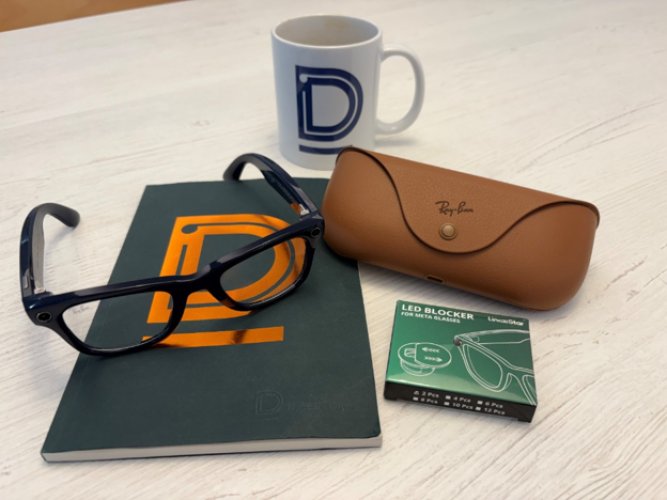
At the time, directors largely saw them as a gimmick because most of their AI functionality was not yet available in New Zealand. This month, as the technology and functionality become much more real here, they provide a useful prompt for a governance conversation that is much bigger than smart glasses themselves.
We have become used to thinking about AI as something we deliberately access. We open ChatGPT, Copilot or another application, type a prompt, upload a document and ask a question. There is a reasonably visible moment when we cross the line into using AI. Ambient AI starts to remove that line.
The technology is around us – in our glasses, watches, hearing devices, cars and meeting rooms – able to see, hear, interpret and assist while we continue doing whatever we were doing. Increasingly, AI may not be something we “choose to use” at all.
That creates some fascinating possibilities, but also some challenging governance questions. Consider a chief executive arriving for their annual performance review wearing AI-enabled glasses. Would the chair be comfortable with that? What if a director wore them during a board-only session? What about a meeting considering an acquisition, receiving privileged legal advice, hearing a whistleblower concern or discussing the conduct of another director?
The issue is not simply whether somebody is secretly filming the meeting. These devices are also an interface to AI.
With current Meta technology, for example, a wearer can ask the AI about something they are looking at. Meta explains that this can involve the glasses taking an image and sending the image and spoken prompt to the model for interpretation.
Holding a sample board paper in front of me, I asked my Meta glasses what I was looking at. My glasses were then able to speak to me through the speakers built into the arms and describe the paper, the top three strategic issues it covered and give me three questions I might ask at the upcoming board meeting.
That might be genuinely useful. But if that material is a confidential board paper, commercially sensitive information, personal employment information or privileged legal advice, it also raises obvious questions about where that information has gone and whether its use is consistent with the organisation’s information security arrangements.
There is another, perhaps less obvious, governance issue: what the possibility of being recorded or analysed does to behaviour.
Good governance depends on candour. Directors need to be able to test half-formed thoughts, disagree, change their minds and have difficult conversations. A CEO needs to be able to speak openly with a chair. How will human behaviour adapt in an ambient AI environment when we are unsure who – or what – is really listening?
New Zealand’s Privacy Commissioner has already highlighted the issue. In August, Michael Webster warned that the ordinary appearance of smart glasses makes covert recording harder for other people to detect and said organisations need to think about workplace policies governing their use.
He also stressed that technological indicators such as a recording light do not remove the need to be transparent with people about the collection of their information. On the recording light issue, for $5 on an overseas website you can get a cover for it. Creepy? Yes. Legal? Also yes.
None of this means the governance answer should simply be to ban wearable AI. There will be real benefits. Imagine directors undertaking a site visit with information available hands-free as they move around, real-time translation supporting international discussions, or technology improving participation for people with visual or other accessibility needs.
Similarly, while the ‘real-time’ language translation now available in New Zealand is still clunky, it will improve and open up all sorts of possibilities for travel and communication.
The challenge is therefore to govern the capability, not chase the particular device. An organisation probably does not need a 'Meta glasses policy’. It does need to understand what connected and AI-enabled devices are permitted in sensitive environments, when their presence should be declared, what constitutes acceptable use, when devices should be removed and what happens when organisational information is captured or processed through an external AI system. Those expectations need to apply to directors and executives, not just employees.
Smart glasses make this conversation tangible because we can see them. The bigger change may be what comes next, when the technology becomes smaller, more embedded and even less noticeable.
The next person who walks into your board meeting wearing AI may not take out a phone, open an app or announce that they are using technology.
They may simply be wearing their glasses.
That is why I bought a pair.