
Geopolitical climate reader
This reader explores how boards can understand geopolitical uncertainty, test its implications for strategy and make timely decisions as…
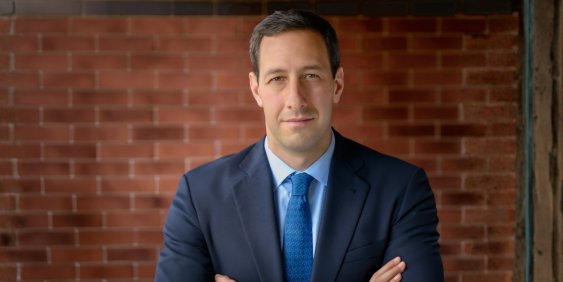
The assumptions that underpinned business for three decades no longer hold. Charles Edel explains why geopolitics is increasingly driving government and business decisions.
For much of the post-Cold War era, governments and businesses assumed economic interests would outweigh geopolitical rivalry. Markets expanded, supply chains stretched across borders and commercial considerations largely drove international relations.
"We thought geoeconomics would trump geopolitics," says geopolitical strategist Charles Edel.
Edel will speak at the IoD’s 2026 Leadership Conference on 3–4 September at Tākina Convention and Events Centre, Te Whanganui-a-Tara, Wellington.

"Geopolitics would take a back seat because that's kind of nasty stuff. The Cold War was over. World War II was way in the rear-view mirror."
That assumption no longer holds.
"Geopolitics is not a thing of the past," Edel says. "It's returned with a vengeance."
Governments are already changing how they make decisions.
"When countries make decisions, they're not simply making decisions based on what's going to maximise profit, what's going to advantage their national economy and what's going to advantage their national champions. There is a slew of factors, oftentimes with national security layered in there as well."
Government intervention, he argues, is becoming the norm rather than the exception.
"If you're used to minimal or light government intervention, things are now changing. We should expect more, not less intervention from governments as they navigate through a much more turbulent era."
Although Donald Trump's return to the White House has heightened uncertainty, Edel argues the shift is much broader than any one leader.
"The security environment is getting more fraught. It's becoming more contested. Wars are now a regular feature of international relations – they're no longer rare nor are they just on the periphery. As a consequence, supply chains are disrupted much more frequently."
Countries including China, Russia and Iran have become more assertive, he says, while increasingly coordinating with one another.
"The call for New Zealand, for Australia, for Japan and for South Korea to do more is simply imperative based on the change in the environment."
Edel doesn't pretend there's an easy way to separate today's headlines from tomorrow's strategic issues.
"The people who do it best have the ability to sing at multiple registers at the same time," he says.
"They can understand what's happening tactically, but they understand how those link to larger strategic trends."
That broader perspective also requires a different approach to resilience.
"Governments and therefore businesses will have to adjust the dial from efficiency to resilience."
For decades, organisations optimised for lean supply chains, lower costs and maximum efficiency. Edel believes today's environment demands different questions.
"The questions now are not just about what might happen, but how disrupted could you be and how well prepared are you?"
Covid-19, wars and repeated supply chain disruptions have demonstrated how quickly events can ripple through businesses far removed from where they begin.
"I don't think it's doomsaying to stare how bad it could be directly in the face," Edel says. "Don't bury your head in the sand."
History can help leaders prepare, but only if it's used carefully.
"We have faced worse in the past. It's useful to see how predecessors dealt with this."
At the same time, he cautions against assuming today's environment is simply a repeat of another era.
"We need to think through the full range of historical analogies to understand the options that we have in front of us."
Despite the disruption, Edel rejects the idea that the future should be viewed only through the lens of risk.
"The world looks more disordered and more disrupted, but that doesn't mean it's all downside."
Periods of significant change create opportunities as well as challenges.
"The new era that we're entering into is going to produce winners and losers alike. It's true amongst nations, it's true amongst sectors and industries, and it's true amongst companies."
Those most likely to succeed, he says, will be those that recognise change early and adapt quickly.
"Those who are most likely to thrive are those who are aware of as much as is happening as possible and who can adapt more quickly to changing conditions."
What worked in the past, he says, won't necessarily work in the future.
"We're just in a new era."
The IoD’s National Leadership Conference brings together more than 500 directors and business leaders for two days of governance discussion and networking on 3–4 September at the Tākina Convention and Events Centre in Wellington. Local and international speakers will discuss governance and leadership issues affecting Aotearoa New Zealand and the wider world. Register here.
This session is sponsored by IoD national sponsor Dentons.