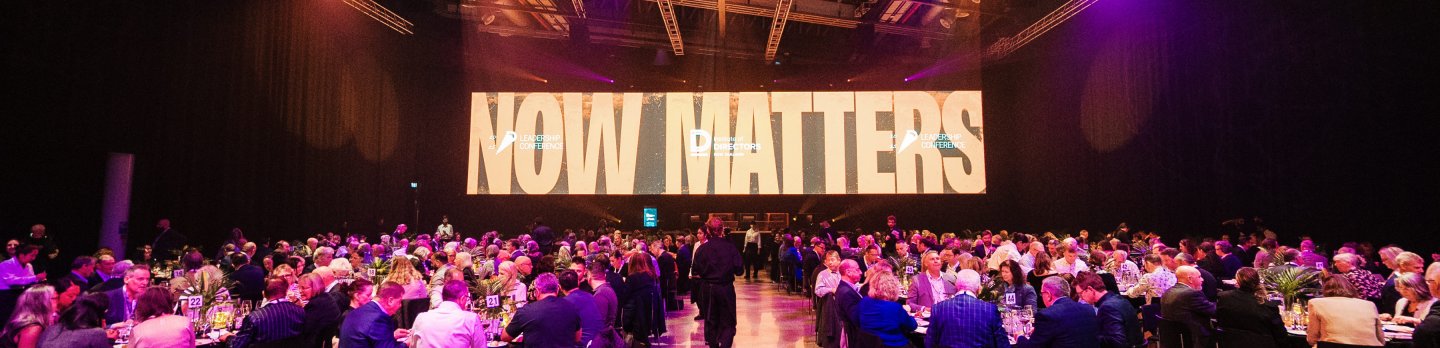
What if your entire board heard the same message at the same time?
Learning together helps directors test ideas and bring fresh thinking back to the board table, says Pacific Homecare chair Caren Rangi.
Pacific Homecare chair Caren Rangi ONZM, CFInstD says the way a board learns should support the way it governs.
“We realised the value of doing things together as a board, to match our responsibility that we are meant to do things together as a board,” says Rangi. “Our Pasifika values underpin our board and organisational culture, where we value the collective.”
Pacific Homecare’s board will attend this year’s Institute of Directors’ National Leadership Conference together, then bring the discussion back into its strategy work.
Pacific Homecare is based in South Auckland and is owned and governed by the Pacific Islands Home Care Services Trust board. It provides services primarily, but not exclusively, for Pacific people. Rangi chairs the board, which will travel to Wellington in September with the chief executive.
The board has already seen the value of shared learning through previous development opportunities, including a governance course on transformation and the IoD’s online AI governance course. In both cases, Rangi says the benefit came from hearing the same material, then discussing what it meant for Pacific Homecare’s strategy and governance practice.
That gave directors a chance to discuss the material, test ideas quickly and ask what needed to change around the board table.
Newer board member Dallas Young MInstD says attending as a full board gives the conference experience more meaning.
“In our Pacific way, leadership is not something we carry alone. It is collective. So learning together, travelling together, sharing meals, stories and reflections gives the experience much more meaning.”
Learning as a board
Rangi says there is a clear difference between one or two directors attending an event and reporting back, and the whole board hearing the same speakers and ideas at the same time.
“There’s something about everybody hearing the same message at the same time, and then very quickly being able to come together and ask, ‘What did you hear? What do you think it means?’”
That shared experience helps directors move quickly from an event to a boardroom conversation. It also reduces the risk that one person’s interpretation becomes the board’s only lens on an issue.
Strategy, risk, technology, workforce issues and stakeholder expectations are rarely the responsibility of one director alone. They require a shared language around the board table.
Supporting strategy conversations
Pacific Homecare is turning the conference into a focused period of board development. Its five board members and chief executive will hold their monthly board meeting in Wellington the day before the conference, attend the two-day event together, then bring the discussion into a strategy session soon afterwards.
With directors often short on time, Rangi says the board wanted to make the most of being together and connect the conference directly to its own work.
“Ultimately, it’s about taking what we’re hearing and considering what impact that might have on our strategy going forward. What do we need to be taking into consideration?” says Rangi.
Pacific Homecare works primarily with Pacific communities, older people and disabled people receiving home-based care. Rangi says the conference is also a chance for directors to step outside their usual frame of reference.
She says it is easy for any board to focus on its own “little patch in the world”. A national conference gives directors exposure to different sectors, governance contexts and ways of thinking.
Building board confidence
The conference will help directors check whether they are focusing on the right issues and using their time well. It also provides a chance to consider where the board could improve.
“There’s always room for improvement,” says Rangi.
Young says the conference is also a chance to build confidence as a newer director.
“I’m still learning the rhythm of the board and the organisation. Being there with the full board means I can learn from the conference, but also from the wisdom and experience of my fellow directors.”
She says Pacific Homecare has “real experience, trust and respect around the table”, as well as space for connection, laughter and honest talanoa.
Newer directors can build their understanding of the wider governance environment, while more experienced directors can reconsider their assumptions and stay current.
Making sense of AI and change
AI is an area where the board wants a shared level of understanding.
Pacific Homecare’s board has already completed the IoD’s online AI governance course and then met to discuss what the learning meant for policy development. Rangi says that helped get directors “on the same page” about AI governance, although there is still work to do.
“We’ve probably felt we’ve been a bit slow in getting our policy clear. Some of that is about us having different levels of confidence around understanding the world of AI.”
Young says she hopes to bring back practical ideas that help her contribute more effectively around the board table.
“I’m especially interested in governance that is strategic, people-centred and grounded in our communities.”
Pacific Homecare serves families, staff and communities where trust matters deeply, she says, so the conference is a chance to bring back ideas that help the board ask good questions, support management well and keep love, care and professionalism at the centre of its decisions.
Bringing the learning back
Pacific Homecare plans to bring the learning back into board discussion, particularly through its strategy work. The aim is to identify which ideas are relevant, what questions they raise and whether anything needs to change in the board’s approach.
Whole-board attendance makes that easier. The board does not need to rely on one person to translate the experience. Directors have heard the same material and can move more quickly into discussion.
Young says shared learning gives a board common reference points.
“We’ll hear the same messages, reflect together and talk about what they mean for Pacific Homecare.”
The 2026 Leadership Conference will be held in Te Whanganui-a-Tara, Wellington, on 3-4 September at Tākina Convention and Events Centre. Group discounts are available for organisations registering four or more attendees. Conference details and registration are available here.