Who is doing the board’s thinking?
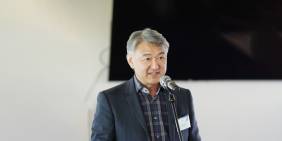
Committees can sharpen scrutiny, but Rodney Wong ONZM, DistFInstD says the full board needs to hear the argument behind the recommendation.

Meet the people behind the board papers – what brought them to governance, what they’ve learnt and what keeps them curious.
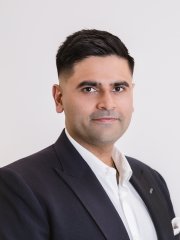
Ashvindev Singh MInstD
Auckland
Current board roles: Trustee, Hagar New Zealand
Day job/organisation: Associate Director, Tech Mahindra New Zealand
It started with whānau. Family members going through cancer treatment were constantly at risk of sepsis and their safety hinged on someone spotting it early. I led a sepsis programme at Auckland City Hospital with a strong clinical team, then took it to Taranaki Base Hospital. Scaling it taught me that good mahi needs a good board behind it, so I joined Sepsis Trust NZ. Then it came home. When my nani – my grandmother, who I spent many years with – became unwell, I found the courage to ask, ‘Could it be sepsis?’ It was. We still lost her, but that question bought us significantly more time with her. Not long afterwards, I became a dad and joined the board of Hagar New Zealand, supporting survivors of modern slavery across Asia and the Pacific. With roots in Southeast Asia, that one was personal.
Covid-19. I’d barely been made chair of Sepsis Trust NZ when priorities flipped overnight and I stepped in as CEO – while still chairing and holding down an executive career. It was intensely hard. The lesson: you can’t be the lighthouse and the ship’s captain at the same time. One keeps watch and sets the direction; the other steers through the storm. Build a team around you so no-one has to be both.
More than 50 million people are in modern slavery – 10 times our population. For Hagar, the challenge is making every dollar count while funding tightens, and making sure our systems and data protect survivors as carefully as our programmes do.
Speak up. If something doesn’t sit right, say so – others are usually thinking the same thing. You’re not there to know everything; you’re there for your judgement. That’s what a strong board brings: sound judgement and the foresight to see around corners. Don’t hold yours back.
How different the view is from the other side of the table. I’ve spent years presenting technology programmes to boards and steering committees – now I’m the one reading the paper at 10pm, wondering what’s not in it.
Turning up without having read the papers. Someone has put real effort into drafting them and as directors we have a duty to get decisions right – you can’t do that from a skim.
Loyal by Dave Dobbyn. A Kiwi classic – loyalty is baked into a director’s duties. I’ll stop there before it turns into a governance dad joke.
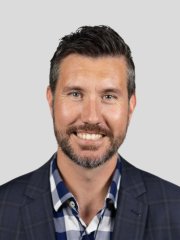
Andrew Corkill CMInstD
Hamilton
Current board roles: Te Ao Mārama School Board Presiding Member. I stepped back from governance for the past two years to focus on my full-time role. I’m currently looking at an additional role.
Day job/organisation: Director Regional Relationships Waikato-Bay of Plenty, NZTA Waka Kotahi
Governance was something I explored early, having started my working life in local government and working with elected members. I have a more general skill set and enjoyed taking a helicopter view and working at a strategic influence level. Governance felt like an opportunity to extend myself in new organisations and industries. Fun fact: I climbed Mount Kilimanjaro in Tanzania this year to mark my 40th birthday. The inspiration came at the 2024 IoD Leadership Conference after talking with other directors who had done the trek. So thanks, IoD, for inspiring my journey.
Do your due diligence. As a result of a little too much optimism and enthusiasm, and ‘saying yes’ in my early governance years, I have had to navigate some fairly entrenched cultural issues. At the time. that was well outside my comfort zone. Those lessons are now cherished memories because of the learning I’ve taken into my current roles. Working in the trenches as a board is a great way of building a strong governance team.
General uncertainty: funding avenues that have long been secure, policy direction and regular change, succession and who the future directors will be to take our organisation forward. The good thing in all this uncertainty is that we are discussing it, strategising, looking for opportunities and remaining positive.
Don’t be afraid to bring your unique opinion and angle to the table through curious questioning. I think I waited too long before pushing myself forward, and until that happened I’d allowed other, more experienced board members, to dominate discussion.
Having contributed mainly at a not-for profit-level, it’s the abundance of great people wanting to volunteer their time for the good of their communities. The transferability of skills into sectors where I never thought I would be able to meaningfully contribute has also been a great surprise.
People monitoring their emails or phone during board discussions. So often people allow themselves to be distracted by their day jobs or other things and aren’t truly present for discussions.
Shiny Happy People by R.E.M. It’s all about whanaungatanga and an aligned and convivial board culture. Without that, the tough discussions can’t happen in the right way.
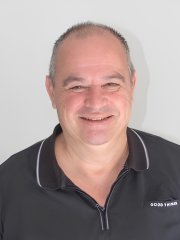
Danny Aperahama Loughlin MInstD (Ngāti Tuwharetoa, Ngāti Whakaue)
Taupō
Current board roles include: Tūwharetoa Māori Trust Board (celebrating 100 years) and Taupō Waters Trust (owner Lake Taupō, most lake tributaries and Waikato River to below Huka falls); Iwi Co-Chair, Waikato River Authority (Co-Governance Waikato River); Te Pae o Waimihia (Settlement Entity Taupo); Tauhara Moana Trust (Dairy Farm); iMaori Limited (Primary Care Health Provider).
Day job/organisation: General Manager, Ngāti Tūwharetoa Fisheries Charitable Trust
I was a chartered accountant and involved in the administration of some of our Māori trusts and incorporations. I was always interested in becoming a trustee and using my business and financial skills. My first role was as a director of Tūwharetoa Health Services Ltd, a Māori Health provider, in 1995.
Mike Tyson’s most famous quote is, “Everyone has a plan until they get punched in the mouth”. The 2015 and 2016 milk solids prices resulted in millions of dollars of losses, with significant impacts on all aspects of farming operations. That’s what being in business looks like.
Like most businesses, it’s finding and keeping skilled employees and managing key-person risk.
Get a governance mentor and maybe not start my journey with a startup organisation.
It can be quite enjoyable if you have a good team around the table.
Māori entities often use a popular vote for the election of trustees. Often new trustees won’t have governance experience and will apply their own values or worldview rather than their duties as a trustee, or lore rather than law. I would ban conversations about someone’s romantic ideal of pre-colonisation governance.
My style is to have a sense of humour and a sense of proportion during a meeting so Happy by Pharrell Williams.
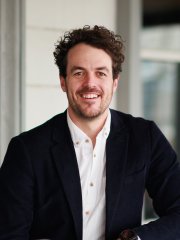
Josh Hickford CMInstD
New Plymouth
Current board roles: Deputy Chair, Community Foundations of Aotearoa New Zealand; Councillor, Chartered Accountants Australia and New Zealand; Chair, FDMC Old Boys Foundation; Trustee, Rural Industry Legacy Trust; Advisory Board Member, BEZE.
Day job/organisation: Chief Executive, Taranaki Foundation
Because boards can shape what becomes possible. I love bringing different perspectives around a table, challenging assumptions and helping an organisation look beyond today’s pressures towards tomorrow’s opportunities. You don’t need everyone to think alike. Quite the opposite.
Doing the right thing isn’t always the comfortable thing. Challenging an established view can be difficult, particularly when others see things differently. Good governance requires the courage to have difficult conversations, especially when staying silent would be easier. How we deliver those truths matters just as much as speaking them.
Keeping pace with change without losing sight of purpose. Technology, expectations and the world around us are shifting quickly. Boards need to spend less time reacting to the weather of the day and more time thinking about the climate of the era.
Listen generously. Observe different leadership styles, take what resonates and leave what doesn’t. You don’t need to become someone else to be an effective governor. You need to become more fully yourself.
How ordinary decisions can create extraordinary legacies. A small decision today might shape opportunities for people we’ll never meet. Of course, the reverse is true, too. That’s why aspiration needs to sit alongside sound judgement.
Passive-aggressive or disingenuous behaviour. Give me a respectful, robust disagreement any day. Say what you think, listen to the response and remember we’re all there to serve something bigger than ourselves.
Blue Suede Shoes by Komodo. A bit unexpected, perhaps, but it’s upbeat and, for me, about self-belief, individuality and holding on to your values.
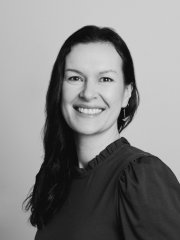
Tomina Apiti MInstD (Tainui, Ngāti Te Wehi)
Manawatū
Current board roles: Board member and Audit & Risk Committee, Arohanui Hospice; Chair, The Backbone Collective; Board member and Audit & Risk Committee, ECPAT Child Alert; advisory board roles with McHugh & Shaw and Tika; Institute of Directors Manawatū Branch Committee.
Day job/organisation: PhD student, Te Herenga Waka – Victoria University of Wellington; māmā to three tamariki, aged 3, 4 and 6.
Starting out, I didn’t really know what I was getting into, but I soon found it’s another way to serve our communities – different from my military service – and that has been incredibly rewarding. I’m always conscious of the people and whānau who seek support, and those brave enough to entrust us with the taonga of their stories and lived experience, so systems and services can keep learning and doing better. That gives the mahi real meaning.
I over-prepared. I read everything, researched anything I didn’t understand, including clinical matters well outside my area of expertise, and prepared questions for everything. I ended up with analysis paralysis and, if I’m honest, I didn’t enjoy my first year as a governor.
AI. The lack of understanding and adoption worries me, but the potential to do more without additional resources excites me. For organisations where every dollar matters, that opportunity is significant. The challenge for boards is putting the right guardrails in place without shutting down the opportunity altogether.
You may be new to this board, but you’re not new to learning. You bring huge capability, and more than just yourself, to the role. This is bigger than you and will be here after you’ve gone. Be the best kaitiaki you can be.
At the beginning, the legislative and fiduciary responsibilities you take on personally were quite scary to grapple with. What I didn’t expect was the pleasure of looking beyond where an organisation is today and thinking about where it needs to be in the future, and how the decisions we make now affect our tamariki and mokopuna.
Online board meetings! I know they’re a necessary part of organisations running with very little resourcing and enable regular meetings. Still, there’s nothing better than being kanohi ki te kanohi to really get into the opportunities and issues.
Can I have two? Mānawa maiea Matariki by TAWAZ and Tomorrow by SIX60. My tamariki sing TAWAZ at the top of their lungs, and Tomorrow was one of my brother’s favourite songs. We played it on repeat while he was receiving specialist palliative care. Both remind me to look ahead, be grateful for the lives we have, keep going when it is difficult, and never lose sight of who we are serving around the board table.
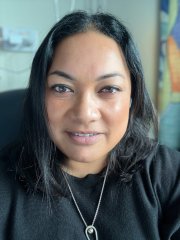
Melanie Gordon MInstD
Nelson
Current board roles: Chair – Nelson Netball Centre; board member – Nelson Tasman Pasifika Trust; Health and Safety Advisor.
Day job/organisation: General Manager; People, Capability & Culture – ER Freeman Ltd
Be the change you want to see. It’s easy to sit on the sidelines and complain – governance puts you at the table. You get the levers, the history, the strategy and the chance to drive change instead of just watching it happen.
Not sure about learning lessons ‘the hard way’ – I believe in going into things with your eyes wide open, and with an open mind to learning, understanding and questioning areas of the organisation at a strategic and governance level. Silence and a good question can often add more value than a strong opinion.
Health and safety, especially mental wellbeing. It’s a live issue for every board and getting it wrong hits people, culture and the bottom line hard. Right behind it: skills balance on the board and AI – how fast it’s moving and how boards keep pace.
Find a mentor who can strip the mystique away. Read the papers – past ones too – so you walk in knowing exactly where you add value.
It’s not just meetings. It’s challenging the thinking, sitting with the ‘thinking out loud’ moments and realising the sheer depth of experience sitting around that table.
Egos.
Don’t Forget Your Roots by SIX60. Governance as stewardship, not ambition – stay grounded, bring people with you, and test every decision against the community you answer to, not just where it takes you.
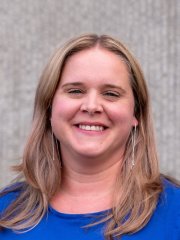 Kintilla du Boucher-Ryan MInstD
Ōtautahi Christchurch
Current board roles: Christchurch City Choir, Brackenridge Services Ltd, University of Canterbury Club.
Day job/organisation: Marketing Manager, University of Canterbury.
I like being involved where the questions are bigger than the answers. Marketing has taught me to think strategically, understand people and make decisions with imperfect information. Governance adds another layer: long-term thinking, stewardship, risk and asking the slightly awkward question when everyone else seems ready to move on. I’ve lived in three countries and worked across very different organisations. Aside from building a passport collection, I’ve become comfortable with different perspectives and the value they bring to good decision-making.
Good governance is not about having the smartest people in the room. It is about having the right conversations. Sometimes that means resisting the urge to solve the problem yourself and instead making sure the board is asking the right questions.
For Christchurch City Choir, it is how to grow awareness and audiences while ensuring the choir can continue to thrive over the long term. Like many organisations, particularly in the creative sector, there’s a tension between ambition, growth and available resources.
You don’t need to prove you deserve your seat at the table. You were invited because your perspective is useful. Listen carefully, speak when you have something to add, and don’t confuse confidence with having an opinion about everything.
How much of it is about judgement rather than knowledge. You rarely have all the information you would ideally like, so you have to become comfortable making decisions without false certainty.
PowerPoint decks being read aloud. We can all read.
Can’t Hold Us by Macklemore. With focus, a clear goal and a willingness to keep pushing, I’m a firm believer that even stretch goals can be achieved, regardless of the size or maturity of the governance group.
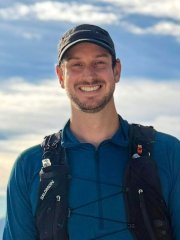 Jamie LeBrun MInstD
Queenstown; formerly Hong Kong and China for 10 years
Current board roles: None. Formerly ZURU Inc – the parent company of ZURU Toys, ZURU Edge and ZURU Tech.
Day job/organisation: Multi-unit Subway franchisee, Hong Kong; Dementia Programme Coordinator, Alzheimers Otago; Youth Academy Coach, Queenstown Associated Football Club.
I enjoy the challenge and dynamics of a boardroom – surrounded by interesting people, solving problems and sharing ideas. Besides exceeding expectations in terms of whatever the entity’s goals might be, it is the range of perspectives and collaboration that I enjoy most.
No ‘hard’ lessons as such. An important one for me as a younger entrepreneur moving into governance was learning ‘patience without paralysis’. As a new member of an established board with an impressive roster, a billion-plus in revenue and growing exponentially across toys, fast-moving consumer goods and housing in every major market, I learnt a lot about patience, but also about acting with conviction once the due diligence was sufficient.
I’m not currently on a board, but I’d assume the adoption of AI within a business without losing it ‘soul’ or ‘human touch’ is a hot topic. AI is certainly polarising. Depending on implementation, it has the potential to enhance or derail a successful business. As someone moving into the mental health space, I would add mental health as something boards need to prioritise on their agendas, too.
I would have sought some formal governance training, as I did when I arrived back in New Zealand at the start of the year. Doing something like the IoD Company Directors’ Course would have given me a lot more confidence at that first meeting.
That even at the highest level, people make mistakes and no one has all the answers. A sense of humility is required for a business to succeed over the long term. Complacency at any level of the business is a killer, but none more so than at the board level.
Maybe not ‘ban’ as such, but the attendance mode should be aligned – meaning either all in person or all online. I understand it’s not easy for bigger boards that might feature a range of independent or non-executive directors, or have footprints that span the globe. As much as possible, getting everyone physically in the same room, where body language, energy, ad hoc discussion and creativity can be seen, felt and embraced, is a big plus.
That’s Life – Frank Sinatra, Vienna – Billy Joel, but at times Life In The Fast Lane – The Eagles would be more fitting.