Candour before the board decides
The CEO may experience each signal separately; the chair is often better placed to see how they connect.
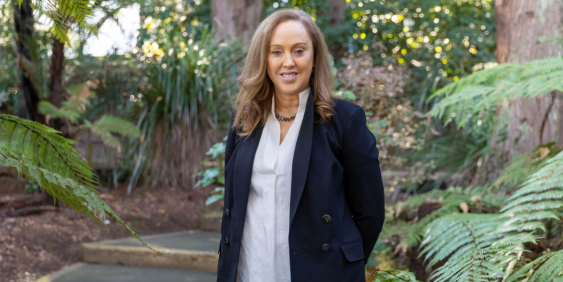
Tania Te Rangingangana Simpson says future chairs need to see good chairing in action before they take the role themselves.
Tania Te Rangingangana Simpson ONZM, CFInstD has spent more than 30 years around board tables. She says one of the most important parts of preparing to chair a board is seeing good chairs in action first.
In 2014, she became the first Māori director appointed to the Reserve Bank of New Zealand board and later served as deputy chair. She is also the first wahine to lead the Waitangi National Trust board.
She will share her experience, together with Scott St John CFInstD and James Miller ONZM, CFInstD, at the IoD’s 2026 Leadership Conference in Te Whanganui-a-Tara Wellington in September.
Their panel event will give directors interested in becoming a chair the chance to hear what the role is really like and ask questions of experienced board leaders.
“There’s a big difference between a good and an average chair,” says Simpson. “I had the benefit of witnessing a number of good chairs along the way. It’s a real skill to be a high-performing chair – and if you haven’t seen it, you don’t know what it is.
“I encourage people to actively seek that out and really understand what a good chair looks like before becoming a chair yourself.”
Simpson says the ability to ensure every voice is heard is one of the key differences.
“People can fall into the mistake of thinking the chair is the fount of all knowledge, but it’s really almost the opposite.
“They are there to bring out the talent of those around the table, facilitating an environment where everyone’s skills, abilities and talents are brought to bear on the organisation.
“They aren’t necessarily the first to speak. Often, they are the last, but they have the ability to put everything on the table and pull it together.
“You often hear people refer to the chair as ‘the conductor’. A good chair ensures members don’t have to compete for airtime, and everyone gets heard.”
Simpson has served on major boards across Crown research institutes to government, iwi and not-for-profits. That has included eight years at the Reserve Bank, nearly 17 years with the Waitangi Tribunal, 14 years with Mercury NZ, nine years with Tainui Group Holdings and five years with Landcare Research.
She is currently a director of Meridian Energy, Auckland Airport and Waste Management NZ.
Having initially chaired remuneration committees and served as deputy chair at Landcare Research, her first board chair role came about 15 years ago, with Te Reo Irirangi o Maniapoto iwi radio station.
She says directors need to understand the significant additional workload that comes with the chair role.
“It’s very much a ‘doing’ role, not a figurehead. A good chair will be very active in supporting the board and organisation, with thorough preparation to make sure meetings run like clockwork.
“You need to be deep in your knowledge of the organisation and very familiar with all the issues.”
Another vital skill Simpson cites is the ability to manage relationships and respond swiftly to challenges.
“You have a group of directors and a management team you have to harmonise, to ensure relationships are strong, communication is flowing well and people can come to you with issues of concern.
“Relationship development is important. You need very good relationships, with the CEO to bring their voice to the board and to reflect the board’s voice to the CEO.”
“People may be struggling, some may have styles that aren’t working with others – all those dynamics must be managed.
“You have to be able to pivot. Organisations go through cycles of challenges. There will be rough weather and things outside of your control, such as the current fuel crisis impacting the bottom line, so you have to be able to manage through the tough times.
“That’s all part of it, but what is really satisfying is seeing your board bringing all their skills and adding value to the organisation. I enjoy being part of that dynamic between board and management, and everyone brainstorming to solve problems.
“A lot of what a board does is strategically taking an organisation forward. I enjoy strategic thinking – where we are going and how we will get there, and everyone bringing their diverse talents to bear on that. That strategic direction is very interesting to me and it’s probably why I stay in governance.
“I am also deeply committed to the promise and commitment of Te Tiriti, being able to demonstrate ways Māori and other government or private organisations can coordinate good outcomes for everybody. Being at the board table and having a voice in that space is particularly satisfying.”
The IoD’s Leadership Conference brings together more than 500 directors and business leaders for two days of governance discussion and networking. It will be held at Tākina Convention and Events Centre, Te Whanganui-a-Tara Wellington, on 3–4 September.
Local and international speakers will discuss governance and leadership issues affecting Aotearoa New Zealand and the wider world. Register here.