Warning signs sports boards should not ignore
Weak information flow, side conversations and repeated stakeholder concerns can point to trouble long before it becomes public.
Olympian Anne Hare says sports boards must listen to athletes, strengthen their duty of care and create safer pathways through elite sport.
A thick skin can be as useful in the boardroom as it is on the world stage. Wellingtonian Anne Hare knows both. She competed at three Commonwealth Games and was a finalist in the women’s 5000 metres at the 1996 Olympic Games in Atlanta, Georgia.
In this episode of Board Talk: Off the Cuff, Anne Hare explains why boards need to do more to support athletes and meet their duty of care, helping people to compete – and remain in sport.
Representing your country requires emotional, physical and psychological stamina to manage the demands of training and pressure leading up to high-stakes competitions.
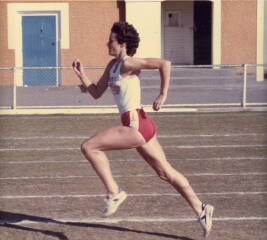
Anne Hare training at the Hutt Rec, 1983. Image supplied
For Hare, that included navigating verbal abuse and criticism from all angles. Her career predated social media, but negative comments from the public were part and parcel of being in the spotlight.
Hare was in her early 30s when she competed at the Olympic Games and felt equipped to handle the vitriol that came her way. Younger or less resilient athletes could easily be thrown off their game, especially when complete strangers told them, “You’re not good enough to go”.
“You better run well now” was another comment from an administrator, who was booking her flights to the Olympics. “As if, because my ticket had been paid for, there was an expectation I should run well”.
“I’ve been picked for the damn team. Why are you saying that to me? I’m the sport. You’re not the sport,” says Hare, recalling the exchange.
Those comments were only the beginning.
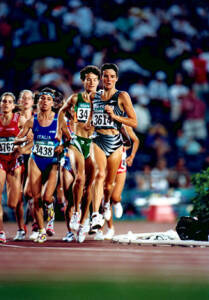
Anne Hare competing in the 5000m final at the Atlanta Olympics. Image supplied
To this day, Hare remains indignant about the lack of support available for elite athletes and coaches. She is also adamant that more support is needed for women in sport – and on sports boards.
After retiring from competitive running in 1997, Hare went on to serve with the New Zealand Olympic Committee and Athletics New Zealand in the hope of helping to create change. One of her proudest moments was fighting for the women’s football team to compete at the Olympic Games.
As an individual athlete, she knew how difficult it was not only to reach an Olympic final, but to reach the Games at all. She believed teams that had qualified deserved the same opportunity.
"It isn’t about picking who’s going to be the gold medallist and who’s not going to be a medallist. It’s about sending people to an Olympic Games who have qualified and then supporting them to do well," she says.
Despite considerable pushback from the committee, Hare believed it was a cause worth fighting for.
The New Zealand Olympic Committee eventually approved the women’s team for competition.
The Football Ferns made their debut at the 2008 Games in Beijing and have since competed at five Olympics, and six FIFA Women’s World Cups. At the 2023 World Cup, a sold-out match at Eden Park became the first women’s sporting event to fill the stadium.
From a commercial perspective, the numbers support the case for women's sports more broadly. Yet Hare believes sports boards still fail to give enough weight to athletes’ views and experience. “There was a lack of listening to the athletes . . . we were there [on the board] to explain some of the things they needed, but often it was ignored," says Hare of her frustrations when pushing for change.
The challenges she encountered as a woman on boards have not disappeared.
“Women’s sport is still essentially governed by mainly men. Quite often you can’t get a word in and because you get left to last as a woman, you’re not really heard,” she says, with frustration.
While she felt a strong sense of camaraderie with the other female athletes in her sport, Hare believes true equity for women won’t be possible unless there is “a separate committee or advisory of women”.
She says women’s bodies are different from men’s, and that needs to be reflected in how sports are designed and governed. In 1995, for example, the barriers for the women’s steeplechase were set at 30 inches, or 0.762 metres.
Emotional and psychological harm within sport also needs more attention from the top down. The often heartbreaking stories that continue to make headlines reinforce Hare’s view that boards must take their duty of care seriously.
Reflecting on the death of Olympic cyclist Olivia Podmore, Hare believes another tragedy is possible unless boards respond to the needs of their athletes.. She sees younger athletes, women and girls as particularly vulnerable.
Fear of speaking up can leave serious issues hidden. When they eventually surface, the damage extends beyond athletes to organisational reputation and stakeholder trust.
"[Boards should] have structures set up that make sure that person isn’t alone and isn’t bullied . . . [otherwise] I think we lose a lot of people [from sport] because we don’t make it attractive for them, we don’t give them the pathways and we don’t look after them,” Hare says.
Listen to the episode to hear why Hare believes clear policies can help boards support their athletes and manage risk, and why coaches need greater support.